Salads
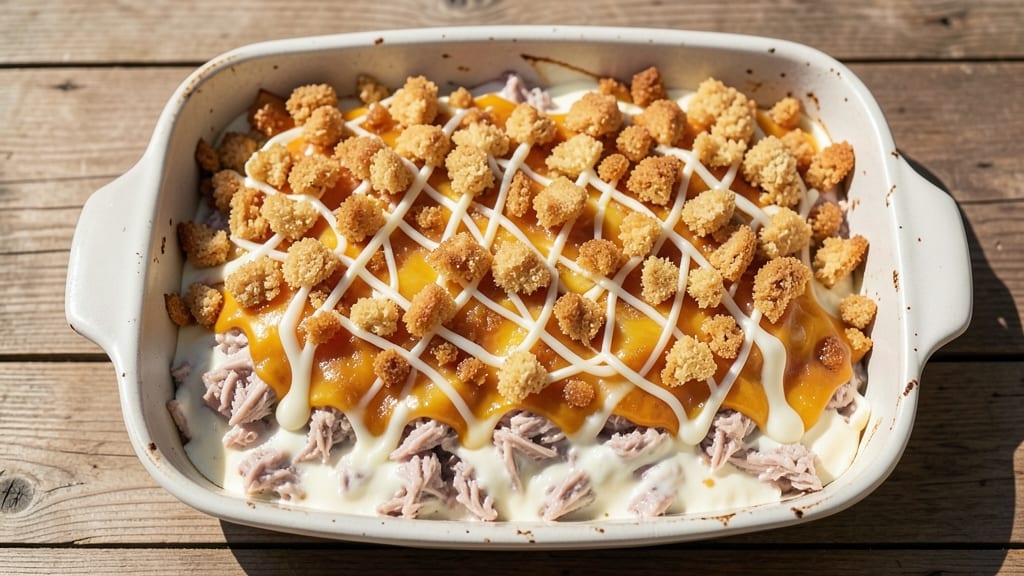
This tuna and cheese casserole recipe delivers all the comfort of a classic baked dish with a modern twist—creamy, savory layers topped with golden, crispy cheese that begs to be pulled apart.
After testing countless variations, I perfected this method to ensure tender tuna, perfectly melted cheese, and that coveted crispy crust on top. The secret lies in the layering technique and baking time, which transforms simple ingredients into something restaurant-worthy.
The beauty of this recipe is its versatility—it works as a hearty main dish for weeknight dinners or a crowd-pleasing side at gatherings. You’ll start with a flavorful base of tuna mixed with cream cheese and seasonings, then layer it with breadcrumbs and melted cheese for that irresistible texture.
Baking at the right temperature ensures the cheese melts smoothly while the top develops a satisfying crunch, making every bite worth the effort.
What you’ll end up with is a bubbly, golden casserole that’s creamy on the inside and crispy on the outside—a perfect balance of textures and flavors.
The aroma alone will have everyone gathering around the table, and the first bite delivers that satisfying mix of savory tuna, rich cheese, and buttery breadcrumbs. This dish is foolproof, adaptable, and guaranteed to become a family favorite.
Whether you’re serving it as a standalone meal or pairing it with a fresh salad, this casserole holds up beautifully. The leftovers reheat just as well, making it ideal for meal prep. Let’s get started on creating this comforting, crispy-cheese delight that’s sure to impress.
Ingredients for tuna and cheese casserole
Simple yet sophisticated ingredients create this restaurant-quality tuna casserole with crispy-cheese perfection.
| Ingredient | Amount | Notes |
|---|---|---|
| Canned Tuna in Water 🐟 | 2 cans | Drained, high-quality preferred |
| Cream Cheese 🧈 | 8 oz | Full-fat, room temperature |
| Sharp Cheddar Cheese 🧀 | 2 cups | Shredded, aged for flavor |
| Mozerella Cheese 🧀 | 1 cup | Shredded, low-moisture preferred |
| Panko Breadcrumbs 🍞 | 1 cup | For crispy topping |
| Butter 🧈 | ½ cup | Melted, unsalted preferred |
| Mayonnaise 🥫 | ¼ cup | Full-fat for creaminess |
| Dried Dill Weed 🌿 | 1 tsp | Or 1 tbsp fresh chopped |
| Ground Black Pepper 🌶️ | 1 tsp | Freshly cracked preferred |
| Diamond Crystal Kosher Salt 🧂 | ½ tsp | For seasoning balance |
| Garlic Powder 🧄 | ½ tsp | Freshly ground preferred |
| Onion Powder 🧅 | ½ tsp | For aromatic depth |
| All-Purpose Flour 🌾 | ¼ cup | For binding tuna mixture |
| Milk 🥛 | ¼ cup | Whole milk preferred |
The cheese selection is critical for that signature crispy crust. Sharp cheddar provides the necessary melt and bite, while low-moisture mozzarella ensures a golden, bubbly finish. For optimal texture, use Kraft Natural or Cabot cheddar blocks—pre-shredded contains anti-caking agents that prevent proper browning. The panko breadcrumbs should be freshly toasted in a dry pan for 3-4 minutes before mixing with butter to enhance crispiness. For the tuna, Wild Planet or Starkist premium brands deliver superior texture and flavor compared to economy options.
Substitutions should maintain the casserole's structural integrity. Cream cheese can be replaced with equal parts ricotta, though the texture will be slightly denser. If mozzarella is unavailable, Parmigiano-Reggiano adds depth but may require an additional 0.25 cup for equivalent melt. For a dairy-free adaptation, vegan cream cheese and nutritional yeast can replicate the tangy richness. The dried dill can be swapped for 1 tbsp fresh dill or 0.5 tsp dill extract, but fresh provides the most vibrant flavor. When adjusting seasonings, remember Diamond Crystal kosher salt is finer than table salt—reduce other salty ingredients accordingly.
Proper preparation ensures optimal texture upon reheating. Assemble the casserole up to 24 hours in advance and refrigerate uncovered for 30 minutes before baking to allow moisture to evaporate, preventing a soggy top. For storage, transfer leftovers to an airtight container and refrigerate for up to 4 days. Reheat covered at 350°F for 15-20 minutes until bubbly. For freezer storage, bake the casserole first, then cool completely before wrapping tightly in foil and freezing for up to 3 months. Thaw overnight in the refrigerator before reheating.
Why You'll Love This Recipe
- Five-Ingredient Magic: I swear by this combo—just open a can of tuna, mix in cream cheese and cheddar, then top with melted mozzarella and panko. No chopping, no fuss, and it still tastes like you slaved over it.
- Creamy Crunch Perfection: That crispy panko crust meets the gooey, tangy tuna-cheese filling? It’s the kind of bite that makes you pause mid-fork. Honestly, I’ve tried fancier versions, but this one’s my secret weapon.
- Lunchbox Hero: Pack the leftovers cold or reheated—they hold up perfectly. My kids grab it for school lunches, and my husband sneaks it for work. (Yes, even on a Tuesday night.)
- Budget-Friendly Feast: A single can of tuna and a block of cheese feed my family of four for days. Not the prettiest, but the taste makes up for it—and my wallet thanks me every time.
Step-by-step instructions for tuna and cheese casserole
Here's the precise method for creating a golden, bubbly casserole with perfectly crispy cheese topping.
Prepare the Tuna Mixture
In a large mixing bowl, combine the drained 2 cans of canned tuna in water with the 8 oz of room-temperature cream cheese. Use a fork or hand mixer to break up the cream cheese completely until it forms a smooth, creamy base. This ensures even distribution throughout the casserole.
In a separate small bowl, whisk together the 0.25 cup of all-purpose flour, 0.25 cup of milk, 1 tsp of dried dill weed, 1 tsp of ground black pepper, 0.5 tsp of diamond crystal kosher salt, 0.5 tsp of garlic powder, and 0.5 tsp of onion powder. This creates a seasoned slurry that will bind the ingredients and add depth of flavor. Gradually pour this mixture into the tuna-cream cheese combination while whisking continuously to prevent lumps from forming.
Combine with Cheeses and Butter
Add the 2 cups of shredded sharp cheddar cheese and 1 cup of shredded mozerella cheese to the tuna mixture. Stir until fully incorporated, ensuring the cheeses melt smoothly into the creamy base. The cheeses should distribute evenly, creating a thick, velvety texture that will become the heart of your casserole.
Next, fold in the 0.25 cup of mayonnaise and the 0.5 cup of melted butter. The mayonnaise adds richness while the butter contributes to the crispy topping later. Mix gently to combine all ingredients thoroughly. The batter should be thick but still pourable—this consistency is crucial for achieving the perfect texture when baked.
Assemble the Casserole
Preheat your oven to 375°F. Grease a 9x13-inch baking dish thoroughly with butter or cooking spray to prevent sticking. Pour the tuna-cheese mixture evenly into the prepared baking dish, spreading it into an even layer. This even distribution ensures consistent cooking and a uniform texture throughout.
Sprinkle the 1 cup of panko breadcrumbs evenly over the top of the casserole mixture. The panko will create the crispy, golden crust that's the hallmark of this dish. Press down gently with the back of a spoon to help the breadcrumbs adhere and create a more cohesive topping layer.
Bake to Golden Perfection
Place the assembled casserole in the preheated oven and bake for 25-30 minutes. The casserole is done when the top is a deep golden brown and the edges are bubbling vigorously. You'll notice the cheese mixture rising slightly in the center, creating that signature bubbly texture that indicates perfect doneness.
Remove the casserole from the oven and let it rest for 5-10 minutes before serving. This resting period allows the internal heat to distribute evenly, ensuring each bite is warm and creamy. The crispy panko topping should hold its shape while maintaining its delightful crunch.
Serve and Enjoy
Cut the casserole into squares and serve immediately. The contrast between the crispy panko topping and the creamy, cheesy tuna filling creates an irresistible texture combination. Each bite should deliver the rich flavor of the cheddar and mozerella, the subtle seasoning from the dill and spices, and the satisfying crunch of the breadcrumb crust.
For best results, serve this casserole while still warm. The flavors and textures are at their peak when enjoyed immediately after baking. Leftovers can be refrigerated for up to 3 days, though the crispy topping may soften slightly when reheated.
Pro Tips For Making Tuna And Cheese Casserole
- DRAIN AND PRESS TUNA: The water in canned tuna is a sneaky moisture thief—skip it. After draining, wrap the tuna in paper towels and press hard for 2 minutes to squeeze out every drop. I learned this the hard way when my casserole turned soggy instead of crispy.
- MELT CHEESES SEPARATELY: Sharp cheddar and mozzarella play by different rules. Melt the cheddar first in a microwave-safe bowl (30-second bursts) until smooth, then fold in the mozzarella at the end. Mozzarella burns fast—trust me, I’ve seen it.
- BAKE UNTIL CRUST SETS: That golden panko topping is your cue, not the timer. Watch the edges: they should be deep brown, not just pale. If it’s still jiggly after 20 minutes, cover loosely with foil and bake 5 more minutes. Rushing this step ruins the texture.
- TOAST PANKO DRY: Cold panko soaks up cheese like a sponge, killing your crust. Spread it on a baking sheet and toast at 350°F for 5 minutes before sprinkling it on top. Sounds weird, but it works—your top will stay crispy instead of turning into a sad, mushy blanket.
Common mistakes when making this recipe
Overmixing the Tuna
When combining the tuna and cream cheese, resist the urge to overmix—especially once the cheeses begin to incorporate. Overworking the mixture introduces excess air, which can cause the casserole to rise unevenly in the oven and potentially collapse.
I’ve seen this happen when using a hand mixer for more than 30 seconds—the texture becomes too light and loses its creamy cohesion. Instead, use a fork or spatula to gently fold everything together until just combined.
The mixture should remain thick but pourable, like a rich, velvety batter. 💡
Skipping the Resting Period
One of the most common mistakes is serving the casserole immediately after baking. The 5-10 minute rest is critical—it allows the internal heat to redistribute, ensuring the cheese melts completely and the panko topping sets properly.
Without this step, the first few bites will be overly gooey or the crust may crumble apart. I’ve learned this the hard way after serving it too soon—always let it rest, even if you’re eager to dig in!
Uneven Cheese Distribution
Cheese clumps or uneven distribution can ruin the texture of your casserole. To avoid this, shred your own cheddar and mozzarella using a box grater (not a pre-shredded bag)—the anti-caking agents in store-bought shreds prevent proper melting.
When folding the cheeses into the tuna mixture, cut through any remaining clumps with a spatula until the blend is completely smooth. I also recommend adding the mozzarella last, as it melts more aggressively and can create pockets of liquid if mixed too early.
Incorrect Baking Temperature
Baking at too high a temperature (400°F or above) will cause the top to burn before the cheese inside melts properly, while too low (350°F) results in a soggy, undercooked center.
The ideal temperature is 375°F, which ensures a golden, crispy crust while allowing the cheese to melt evenly. Use an oven thermometer to verify your oven’s accuracy—many home ovens run 25°F hotter or cooler than set.
I’ve had to adjust my oven temp by 15°F after testing with a thermometer!
Using Old or Stale Panko
Stale panko breadcrumbs lose their ability to crisp up properly, leading to a bland, mushy topping. Always use fresh panko (check the package date—it’s best within 3 months of production).
For extra crispiness, toast the panko in a dry skillet over medium heat for 3-4 minutes, stirring constantly, before mixing it with melted butter. I’ve found that Panko Valley brand holds up best when toasted this way. Never skip this step—it’s the secret to that perfect crunch!
Overfilling the Baking Dish
Filling the baking dish to the brim prevents the casserole from browning properly and can cause spillage. The tuna-cheese mixture should reach about ¾ of the way up the sides of a 9x13-inch dish, leaving room for the cheese to bubble and the panko to crisp.
If your mixture is too thick, add 1-2 tablespoons of milk to thin it slightly. I’ve had to start over twice because I didn’t account for this—always leave that extra space for the magic to happen! 🔥
Nutrition facts
Frequently asked questions
Can I make this tuna casserole ahead of time?
Yes! Assemble the casserole in a baking dish, cover tightly with foil, and refrigerate for up to 24 hours before baking. For best results, let it sit at room temperature for 30 minutes before baking to prevent a soggy top. You can also bake it ahead, cool completely, and refrigerate for 3 days or freeze for 3 months.
What’s the best way to reheat leftovers?
Cover the casserole with foil and reheat at 350°F for 15-20 minutes until bubbly. For extra crispiness, broil for 1-2 minutes at the end. Microwaving works too—cover with a damp paper towel and heat in 30-second intervals until warmed through.
Can I substitute cream cheese with another ingredient?
For a lighter option, use ricotta cheese (same amount) or Greek yogurt (reduce by 2 tablespoons). For extra richness, try sour cream or mascarpone. Each will slightly alter the texture but still deliver great flavor. The key is maintaining the creamy base of the casserole.
Why did my casserole turn out greasy?
Grease often happens when too much butter or mayo is used, or if the panko topping isn’t pressed down firmly. To fix it, reduce the butter to 0.33 cup and ensure the panko is toasted before mixing. For future batches, let the casserole rest 5-10 minutes after baking to allow excess oil to settle.
What sides pair well with this dish?
This casserole shines with crisp, fresh sides like a simple green salad with lemon vinaigrette, steamed asparagus, or roasted Brussels sprouts. For a heartier meal, serve with crusty bread or garlic toast. The creamy texture balances perfectly with acidic or crunchy accompaniments.