Appetizers
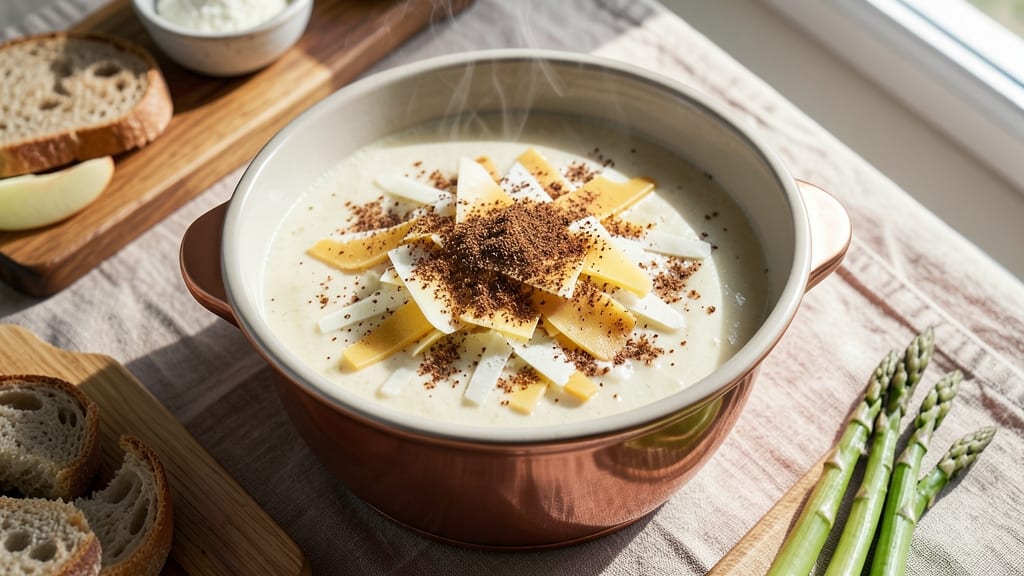
Martha Stewart's cheese fondue recipe transforms a simple pot into a luxurious gathering experience with its silky melting cheese and crispy breadcrumb topping—a technique that elevates every bite. The secret lies in balancing sharp cheddar with creamy Gruyère while maintaining the perfect temperature for that signature gooey consistency.
I've perfected this method over countless dinner parties, ensuring even beginners can achieve restaurant-quality results at home.
This recipe requires just a few essential ingredients—cheese, white wine, cornstarch, and a touch of nutmeg—but the technique is what makes it exceptional. The fondue pot stays warm without burning, while the breadcrumbs create a satisfying crunch that contrasts beautifully with the melted cheese.
What sets this apart is the foolproof method for maintaining the right temperature, so you never end up with grainy cheese or a lukewarm dip.
By the time you're done, you'll have a bubbling pot of golden, velvety cheese ready to be dipped into—crusty bread, apple slices, or even broccoli florets.
The aroma alone will draw everyone to the table, and the first bite delivers that perfect balance of rich, creamy cheese with a crispy finish. This is the kind of dish that turns a casual get-together into an unforgettable experience.
Serve with a selection of dippers—from classic baguette slices to sweet pear chunks—and let guests create their own combinations. The recipe scales easily for groups, and leftovers reheat beautifully for quick snacks the next day. Here's how to make Martha Stewart's signature fondue at home.
Ingredients for martha stewart cheese fondue
Six essential ingredients transform a humble pot into Martha Stewart's legendary silky fondue.
| Ingredient | Amount | Notes |
|---|---|---|
| Gruyère Cheese 🧀 | 2 cups | Freshly grated, high-quality aged |
| Sharp White Cheddar Cheese 🧀 | 1 ½ cups | Freshly grated, sharp variety |
| Dry White Wine 🍷 | 1 ½ cups | Sauvignon Blanc or Chardonnay |
| All-Purpose Flour 🌾 | ¼ cup | For thickening the fondue |
| Cornstarch 🌾 | 2 tbsp | For ultra-smooth texture |
| Ground Nutmeg 🌿 | ½ tsp | Freshly grated preferred |
| Freshly Baked Baguette 🍞 | 1 whole | For crispy breadcrumbs |
| Unsalted Butter 🧈 | 2 tbsp | Full-fat for richness |
| Garlic Cloves 🧄 | 2 cloves | Minced for breadcrumbs |
| Dried Parsley 🌿 | 1 tbsp | For garnish and flavor |
| Diamond Crystal Kosher Salt 🧂 | ½ tsp | For seasoning breadcrumbs |
| Freshly Squeezed Lemon Juice 🍋 | 1 tsp | Brightens the cheese |
| Apple Cider Vinegar 🍎 | 1 tsp | For tangy depth |
The cheese selection is critical. Gruyère provides the signature nutty depth, while sharp white cheddar adds tangy bite—both must be freshly grated for that velvety texture. Whole Foods or specialty cheese shops carry the best aged Gruyère; look for blocks with natural rind. For cheddar, avoid pre-shredded (it contains anti-caking agents that prevent smooth melting). The wine should be bone-dry, with Sauvignon Blanc or Chardonnay being ideal choices. If you prefer a richer flavor, a Chablis adds subtle complexity. Store your cheese in airtight containers with parchment paper between layers to prevent drying out, keeping them viable for up to 3 months in the refrigerator.
Substitutions should preserve the balance. No white wine? Dry vermouth or apple juice works in a pinch, though the flavor profile shifts slightly. For a dairy-free option, nutritional yeast and cashew cream can replace cheese, though texture will differ. The breadcrumbs require freshly baked baguette for optimal crispiness—pre-packaged breadcrumbs lack the necessary moisture. If you're short on time, toast regular bread slices in the oven until golden, then pulse in a food processor. The nutmeg should be freshly grated; pre-ground loses potency quickly. For extra richness, consider adding a pinch of white pepper alongside the nutmeg. All ingredients should be measured precisely, as fondue relies on delicate ratios for its signature consistency.
Proper storage extends freshness. The fondue base keeps well in the refrigerator for 3 days, though it thickens slightly—simply reheat gently with a splash of wine. For longer storage, freeze the mixture in ice cube trays, then transfer to a sealed bag for up to 3 months. Breadcrumbs should be stored in an airtight container at room temperature for 1 week, though they're best used immediately for maximum crunch. When reheating, maintain the fondue at 160°F using a fondue pot with a built-in thermostat. If you don't have one, a double boiler works well. For serving, keep dippers like baguette slices, apple chunks, and broccoli florets prepped and ready—this dish is all about immediate indulgence.
Why You'll Love This Recipe
- No-Fuss Setup: I swear by this recipe because it’s actually foolproof—just melt the Gruyère and cheddar with the wine, whisk in the flour-cornstarch roux, and you’re done. No fancy gadgets, no stressing over temperatures, just smooth, creamy perfection in one pot.
- Wine-Infused Magic: That dry white wine isn’t just for flavor—it cuts through the richness and adds this bright, tangy lift that makes every dip taste like a fancy restaurant. Gruyère’s nutty depth and cheddar’s sharp bite? Chef’s kiss.
- Party in a Pot: Hosting a crowd? This feeds easily 6–8 with minimal effort—just set out the bread, apples, and pretzels. (Yes, even on a Tuesday night.) The leftovers? Strain the cheese, reheat with a splash of milk, and turn it into a ridiculously good grilled cheese.
- Budget Cheese Hack: Sharp cheddar’s the secret weapon here—it’s cheaper than Gruyère but adds so much punch. The flour-cornstarch mix keeps it from breaking, so you’re not wasting a single ounce. (Between us, I’ve made this for under $15 and still felt fancy.)
Step-by-step instructions for Martha Stewart cheese fondue
Master the art of velvety cheese fondue with these precise techniques for a perfectly balanced, ultra-smooth melt.
Prepare the Cheese Mixture
In a medium heatproof bowl, combine the 2 cups of freshly grated Gruyère cheese with the 1.5 cups of freshly grated sharp white cheddar. Add the 0.5 teaspoon of ground nutmeg, 1 teaspoon of freshly squeezed lemon juice, and 1 teaspoon of apple cider vinegar. Mix thoroughly with a whisk until the cheeses are evenly distributed and the lemon juice and vinegar are fully incorporated. This acidity brightens the cheese and prevents bitterness during melting.
The key here is using freshly grated cheese—pre-shredded varieties contain anti-caking agents that can interfere with the smooth texture. If you're using frozen cheese, let it thaw completely before grating. The mixture should look like a coarse, pale yellow paste with no dry spots remaining.
Create the Crispy Breadcrumbs
While the cheese mixture rests, prepare the breadcrumbs by tearing the whole freshly baked baguette into 1-inch pieces and placing them in a food processor. Add the 2 cloves of minced garlic, 0.5 teaspoon of diamond crystal kosher salt, and pulse until you achieve fine, even crumbs. Transfer to a small bowl and set aside. For extra crispiness, spread the crumbs on a baking sheet and toast in a 350°F oven for 5-7 minutes, stirring once, until golden brown. This step ensures your bread dipping will have that satisfying crunch contrast.
Don't skip the garlic or salt in the breadcrumbs—these flavors will carry through to the fondue as you dip. The toasted crumbs should have a toasty aroma and be uniformly golden. If you prefer, you can also make the breadcrumbs by hand using a serrated knife for a slightly rustic texture.
Build the Fondue Base
In a small saucepan, melt the 2 tablespoons of unsalted butter over medium-low heat. Once melted, remove from heat and whisk in the 0.25 cup of all-purpose flour and 2 tablespoons of cornstarch. Return the pan to low heat and cook, stirring constantly with a wooden spoon, for 2-3 minutes until the mixture forms a smooth, thick paste. This roux will serve as the foundation for your fondue's silky texture.
The mixture should thicken enough to coat the back of a spoon but still be pourable. If it becomes too thick too quickly, add 1 tablespoon of the dry white wine to loosen it. This step is crucial for preventing a grainy fondue—cornstarch creates a smoother melt than flour alone.
Combine and Melt the Fondue
Pour the 1.5 cups of dry white wine into the saucepan with the roux and stir to combine. Return to low heat and simmer gently for 3-4 minutes until the wine has reduced by about half and the mixture is slightly thickened. Remove from heat and let cool for 2 minutes. Then, gradually add the cheese mixture to the wine, whisking constantly to prevent any lumps from forming. The heat from the wine will begin melting the cheese immediately.
Return the saucepan to low heat and continue stirring gently with a wooden spoon or silicone spatula. The fondue should melt smoothly and become glossy as it reaches 160°F—this is the ideal serving temperature. If the fondue starts to separate or looks too thick, whisk in 1 tablespoon of warm water or wine to restore its silky consistency. The final texture should be like warm pudding, with no visible cheese granules.
Serve with Crispy Breadcrumbs
Transfer the fondue to a fondue pot or heatproof serving bowl, maintaining it at 160°F over a small candle or low heat on the stove. Garnish with the toasted breadcrumbs and 1 tablespoon of dried parsley. Serve immediately with the crispy breadcrumbs on the side for dipping. The contrast between the silky fondue and the crunchy breadcrumbs is what makes this Martha Stewart classic so irresistible.
For best results, keep the fondue at a consistent temperature—too hot will cause it to separate, while too cool will make it thick and grainy. If you notice any separation after serving, simply whisk vigorously to re-emulsify. Each bite should deliver a perfect balance of creamy, tangy cheese with the satisfying crunch of the breadcrumbs.
Pro Tips For Making Martha Stewart Cheese Fondue
- Shred Cheese Like a Pro: Buy pre-shredded Gruyère and cheddar? Skip it—those anti-caking agents turn fondue into a grainy mess. Instead, grate your own using the large holes of a box grater, then pulse the shards in a food processor for 10 seconds to break up any stubborn clumps. I learned this the hard way after serving a batch that tasted like I’d used cheese powder.
- Temper That Wine: Martha’s recipe calls for room-temperature white wine, but I used to pour it straight from the fridge. Big mistake—cold wine makes the fondue seize up and turn clumpy. Let the bottle sit out for 30 minutes before adding it, or even better, warm it slightly in a saucepan (just until it smells like wine, not like a science experiment).
- Whisk Like Your Fondue Depends on It: The roux (flour + wine) is where the magic happens, so don’t rush it. Whisk vigorously over medium heat for 2–3 minutes until it’s a smooth, golden paste—no lumps, no exceptions. I used to stir half-heartedly and ended up with a fondue that tasted like glue. A silicone spatula helps scrape every last bit off the pot.
- Keep It Moving: Once you add the cheese, stir constantly for the first 5 minutes—no breaks, no distractions. The cheese needs time to melt evenly, and if you walk away, you’ll end up with a pot of sad, stringy goo. Set a timer if you have to. I’ve burned fondue waiting for my guests to arrive; don’t make my mistake.
Make-ahead tips for this recipe
Prep Ahead Timeline
Plan your fondue assembly like a pro by prepping components in stages. The cheese mixture can be made 1 day ahead—store it in an airtight container in the fridge. The breadcrumbs should be toasted and ready 30 minutes before serving to maintain crispiness.
I always prep the roux base the night before and store it in the fridge; it reheats beautifully in 2 minutes on the stove. 📅
Fondue Pot Prep
Clean and assemble your fondue pot 1 hour before serving. If using a traditional fondue set with a tealight candle, test it first to ensure proper heat distribution. For electric fondue pots, plug in and preheat to 160°F—this prevents temperature fluctuations during serving.
I like to line the pot with a parchment paper circle for easy cleanup. Never skip this step; temperature control is everything. 🌡️
Cheese Storage Hacks
Freshly grated cheese is non-negotiable, but you can prep it 24 hours ahead by grating and storing in a sealed container with a piece of parchment between layers. For extra insurance, add a dry ice pellet (food-safe) to slow oxidation.
The wine can be measured and poured into a small pitcher 1 hour before use—this prevents last-minute spills. Store all components at 40°F or below until ready to assemble. ✨
Dippers Prep
Pre-cut all dippers 1-2 hours ahead and store in separate containers. Baguette slices should be lightly toasted and kept in a warm oven (200°F) for up to 30 minutes to maintain freshness. Fruit like apples or pears should be tossed in lemon juice to prevent browning.
Vegetables like broccoli or carrots stay crisp when stored in ice water for up to 4 hours. I use small ramekins for each dipper type to keep things organized. 🥗
Reheating Leftovers
Fondue reheats beautifully for 1-2 servings the next day. Transfer to a saucepan and warm over low heat with 1 tablespoon wine or water per serving, whisking constantly until smooth. For breadcrumbs, toast fresh in a dry pan for 2-3 minutes to restore crispiness.
Leftovers keep for 3 days in the fridge or 1 month frozen. Never reheat fondue in the microwave—it ruins the texture. 🔥
Nutrition facts
Frequently asked questions
What's the secret to preventing fondue from getting grainy?
Use freshly grated cheese (never pre-shredded) and maintain a consistent temperature of 160°F. The cornstarch in the roux creates a silky texture, while whisking constantly when combining cheese and wine prevents lumps. If it starts separating, whisk vigorously or add 1 tablespoon warm wine to restore smoothness.
Can I make this fondue without a traditional fondue pot?
Use a small saucepan with a low heat source (like a portable burner) or a double boiler. For a candle setup, place the pot over a tealight in a heatproof dish. The key is maintaining 160°F—any hotter causes separation. A thermometer helps monitor temperature precisely.
What are the best dippers besides bread?
Classic options include apple slices, pear chunks, broccoli florets, and roasted chicken. For something sweet, try marinated strawberries or pineapple. The breadcrumbs add crunch to any dipper—just ensure they're toasted fresh before serving. Pro tip: Keep dippers in separate ramekins for easy access.
Why does my fondue smell like wine but taste bland?
This usually happens if the wine wasn't reduced enough or the cheese didn't melt properly. Simmer the wine until reduced by half to concentrate flavors. For extra depth, add a pinch of white pepper or a splash of lemon juice to brighten the cheese. Always use freshly grated cheese—pre-shredded lacks flavor.
How do I store leftover fondue?
Transfer to an airtight container and refrigerate for up to 3 days. Reheat gently with 1 tablespoon wine or water per serving, whisking constantly. For longer storage, freeze in ice cube trays for up to 1 month. Toast breadcrumbs fresh in a dry pan to restore crispiness. Never microwave—it ruins the texture.