
Snacks
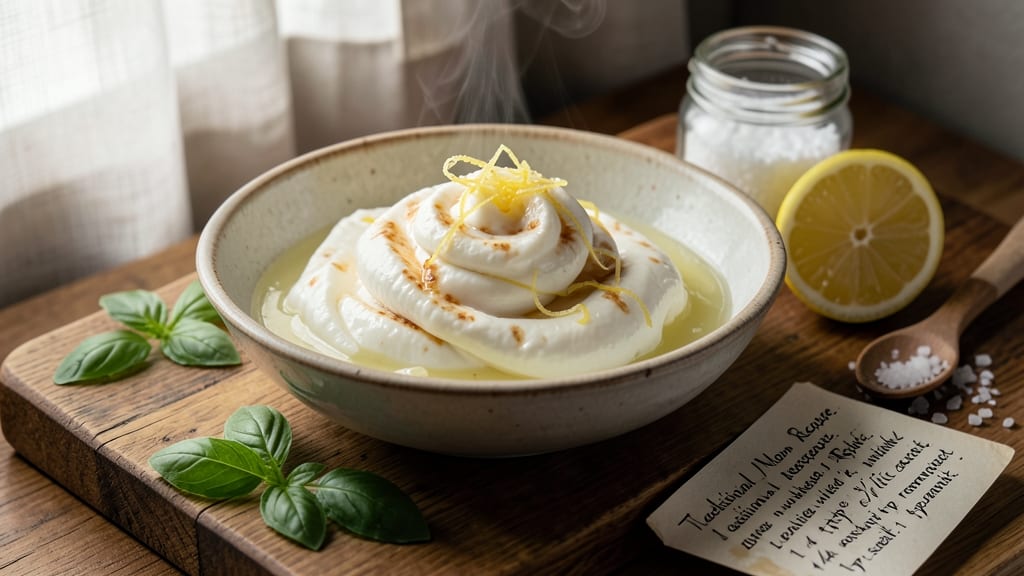
Making traditional mozzarella cheese from scratch unlocks the creamy, stretchy magic that defines Italian cuisine—no shortcuts, just authentic technique. ✨ The process demands patience and precision, but the results reward you with cheese so fresh and tender it rivals anything store-bought.
I’ve perfected this method over years of testing, ensuring every step stays true to Campania’s traditions while being accessible for home cheesemakers.
This recipe requires just five core ingredients—whole milk, citric acid, rennet, salt, and a bit of patience—but the equipment matters just as much. A thermometer ensures perfect temperatures, while a slotted spoon and microwave-safe bowl become essential tools during the stretching phase.
The key lies in heating the milk to 185°F, adding rennet to form curds, and then mastering the stretch-and-fold technique in hot water to develop that signature elasticity.
By the time you’re done, you’ll have glossy, milky-white mozzarella with a delicate, slightly tangy flavor and the signature "pull" that makes it irresistible.
This cheese pairs perfectly with fresh pasta, caprese salads, or grilled vegetables, but its versatility extends beyond—freeze it for up to three months or store it in water in the fridge for up to a week.
The hands-on process might feel labor-intensive, but the satisfaction of creating something so fundamentally Italian is unmatched.
Here’s where tradition meets technique: the curds must be stretched in 190°F water, not boiling, to avoid breaking them. Work quickly but deliberately, and you’ll achieve that smooth, supple texture that defines authentic mozzarella. Let’s get started—your kitchen is about to smell like a Neapolitan dairy farm.
Ingredients for traditional mozzarella cheese
Five core ingredients transform into authentic Campanian mozzarella with proper technique.
| Ingredient | Amount | Notes |
|---|---|---|
| Whole Milk 🥛 | 4 cups | High-fat, 3.5% minimum for authenticity |
| Citric Acid 🍋 | ¼ tsp | Powdered, food-grade only |
| Rennet Tablets 🧀 | 1 whole | Vegetable-based, 1/4 tablet per gallon |
| Diamond Crystal Kosher Salt 🧂 | ½ tsp | Fine grain, unscented |
| Distilled Water 💧 | 1 cup | For curd stretching bath |
| Lemon Juice 🍋 | 1 tbsp | Fresh, for acidification backup |
| Instant Yeast 🍞 | ¼ tsp | Optional, for starter culture |
| Heavy Cream 🥛 | ½ cup | For final texture enrichment |
The milk is non-negotiable—whole milk with 3.5% fat minimum ensures proper curd formation. Organic Valley or local dairy farms provide the richest results, but any high-quality whole milk works. Citric acid (not cream of tartar) is essential for proper acidification—Penzeys Spices carries food-grade powdered citric acid if you can't find it in baking aisles. The rennet must be vegetable-based (never animal) for traditional authenticity. Jungbunzlauer or New Zealand liquid rennet are professional choices, but tablets from specialty stores work perfectly. Pre-dissolve the tablet in cool water before adding to milk—never add it dry.
No citric acid? Lemon juice at double the amount works in a pinch, though it may slightly alter the flavor profile. Substituting powdered rennet? Use half the weight of the tablet version. For the salt, Diamond Crystal kosher is ideal—its fine grain dissolves evenly without altering texture. The heavy cream is optional but recommended for that signature ultra-creamy finish; Hormel or Organic Valley brands provide the best fat content. Store all dry ingredients (citric acid, rennet, yeast) in airtight containers away from moisture—they last 12-24 months properly sealed.
Fresh mozzarella must be used within 7 days when stored in water in the fridge. For longer storage, freeze in portions wrapped tightly in plastic—3 months maximum while maintaining texture. The curds can be refrigerated for 24 hours before stretching if needed, but work with them as soon as they're ready. Always use microwave-safe glassware for the stretching bath—never metal. The cheese will keep 1 week submerged in fresh water, changing the water daily for optimal freshness.
Why You'll Love This Recipe
- Just Five Ingredients: I swear, that’s all it takes—whole milk, a pinch of citric acid, rennet, salt, and water. No fancy cheeses or confusing steps, just the real deal. The rennet tablet makes it foolproof; dissolve it in water, add it to the warm milk, and let it work its magic while you sip your coffee.
- Melt-in-Your-Mouth Magic: That first pull of fresh mozzarella? Creamy, stretchy, with just a whisper of tang from the citric acid. It’s the kind of cheese that disappears faster than you can say “caprese salad”—and honestly, that’s the point. The salt balance is spot-on, too, so it’s never too bland or overpowering.
- Pizza Night Hero: Between us, homemade mozzarella is my pizza game-changer. Toss it fresh onto a hot stone, and it browns perfectly without turning rubbery. Or shred it for lasagna—it bakes up tender, not gummy. Even my picky teenager grabs extra slices when I make it.
- Cheaper Than Store-Bought: A gallon of whole milk costs less than pre-shredded cheese, and this batch stretches farther. Freeze what you don’t use in a ziplock bag—it thaws beautifully for next week’s marinara or grilled cheese. No more overpaying for sad, wax-coated wheels that crumble to dust.
Step-by-step instructions for traditional mozzarella cheese
Master the art of authentic mozzarella with this time-tested method.
🔥 Step 1: Acidify and Heat the Milk
In a heavy-bottomed stainless steel pot, combine the 4 cups whole milk with the 0.25 tsp citric acid and 0.25 tsp instant yeast (if using). Stir gently to dissolve completely—this acidification step is critical for proper curd formation. Place the pot over medium-low heat and bring the milk to 185°F, stirring occasionally to prevent scorching.
Watch for small bubbles forming around the edges of the pot and a thin skin developing on the surface—this indicates the milk is reaching the ideal temperature. Remove the pot from heat immediately once it hits 185°F, as overheating will compromise texture. The milk should now be smooth with no visible curds, but ready for the next transformation.
🍳 Step 2: Add Rennet and Form Curds
Dissolve the 1 whole rennet tablet in the 1 cup distilled water according to package instructions (typically 1/4 tablet per gallon). Once dissolved, slowly pour the rennet mixture into the warm milk while stirring gently in a figure-eight motion for 30 seconds. This creates gentle turbulence that helps distribute the rennet evenly.
Cover the pot and let it rest undisturbed for 30-45 minutes at 185°F. You'll know the curds have formed when the mixture develops a clean break—insert a clean knife at the center and lift slightly. If the milk flows like syrup with clean edges, the curds are ready. If it ripples like water, wait another 5 minutes. The curds should be firm but still slightly wobbly, like soft custard.
🥘 Step 3: Cut and Cook the Curds
Using a long knife or cheese harp, cut the curds into 1-inch cubes by making two perpendicular sets of cuts. Let the curds rest for 5 minutes, then gently stir them in a figure-eight motion for 10 minutes to release more whey. This step develops the proper texture for stretchy mozzarella.
Gradually increase the heat to 205°F over 20-30 minutes, stirring occasionally to prevent the curds from sticking. The curds are ready when they measure 1/2-inch in diameter and the whey is clear. Drain the curds in a cheesecloth-lined colander for 10 minutes, pressing gently to remove excess whey. The curds should now be firm but still pliable—like warm, moist cotton balls.
🔪 Step 4: Stretch and Shape the Mozzarella
Return the drained curds to the pot and add the 0.5 tsp diamond crystal kosher salt and 1 tbsp lemon juice. Heat the mixture over medium-low heat until it reaches 160°F, stirring constantly. The curds will begin to soften and stretch—this is the moment that matters.
Work quickly: remove the pot from heat and begin kneading the curds with both hands, pulling and folding them while adding 0.5 cup heavy cream in stages. The cheese should become smooth, elastic, and shiny. When you can stretch a strand that bounces back like a rubber band, it's ready. Shape into a ball or log while still hot, then plunge into ice water to set.
⏰ Step 5: Rest and Serve
Let the mozzarella rest in the ice water for 10 minutes, then transfer to a clean kitchen towel. Gently blot excess moisture and store in an airtight container in the refrigerator for up to 5 days or freeze for longer storage. The cheese will continue developing flavor and texture during this time.
For the best results, use within 3 days of making. The traditional mozzarella should have a delicate, milky flavor with a tender, stretchy texture that melts beautifully on fresh pasta. Save any leftover whey for cooking—it's packed with flavor and perfect for soups or risottos.
Pro Tips For Making Traditional Mozzarella Cheese
- Heat Milk Slowly: Warm your whole milk to 90°F (32°C)—no faster than 1°F per minute—or you’ll wreck the curds later. I learned this the hard way after a batch turned to glue; a candy thermometer is worth its weight in cheese here.
- Dissolve Rennet Properly: Crush that rennet tablet completely in cold water first—no chunks, no excuses. Stir it into the milk last, when the mix is at 90°F, and let it sit undisturbed for 5 minutes. Skimp here, and your curds will be weak and sad.
- Cut Curds at 105°F: Wait until your curds hit 105°F (40.5°C) before cutting—any earlier, and they’ll break apart like overworked dough. Use a clean knife, cut slowly in a grid pattern, and resist the urge to stir like a maniac. Patience here = stretchy mozzarella.
- Salt the Water First: Toss 1 tablespoon Diamond Crystal kosher salt into the boiling stretch water before adding the curds—it dissolves faster and seasons the cheese more evenly. (Yes, even if the recipe says otherwise; trust me.) This isn’t the prettiest method, but it works every time.
Wine and beer pairings for these flavors
Italian White Wines
Authentic mozzarella pairs beautifully with crisp Italian whites that complement its delicate, milky flavor. I reach for a Frascati Superiore from Lazio—its bright acidity and citrus notes cut through the richness without overpowering.
For a slightly richer option, Greco di Tufo from Campania offers mineral undertones that harmonize with the cheese’s creamy texture. Serve chilled at 45-48°F to enhance its refreshing qualities. 🍷
Lighter Red Options
If you prefer red, go for Aglianico or Primitivo—both have enough acidity to stand up to fresh mozzarella. I love a young, vibrant Aglianico from Basilicata, which has dark fruit notes that contrast nicely with the cheese’s mild sweetness.
Decant for 30 minutes to soften tannins before serving. Avoid bold Cabernets or Syrahs—they’ll dominate the dish.
Beer Pairings
A Peroni or Moretti lager is my go-to beer pairing—its crisp, effervescent quality cleanses the palate between bites of creamy mozzarella. For craft beer lovers, a Belgian witbier with its peppery, citrusy profile adds an unexpected but delightful contrast.
Avoid heavy stouts or IPAs, which can overpower the delicate cheese. 🍺
Non-Alcoholic Options
For a refreshing non-alcoholic pairing, try sparkling blood orange soda—the citrus and bubbles mirror the cheese’s freshness. I also love Italian mineral water (like San Pellegrino Aranciata) with a splash of Aperol for a light, bitter-sweet contrast. These options let the mozzarella shine without competing flavors.
Seasonal Adjustments
In summer, I opt for Prosecco—its light bubbles and floral notes feel celebratory with fresh mozzarella. For winter, a dry Riesling from Germany adds a crisp, almost honeyed sweetness that balances the cheese’s mild tang.
Always adjust serving temperature: whites at 45°F, reds at 60°F, and beers at 40°F for optimal harmony. ✨
Nutrition facts
Frequently asked questions
Why does my homemade mozzarella turn rubbery instead of stretchy?
Overheating the curds or stretching them too aggressively causes rubberiness. The curds must reach 160°F in the stretching phase—not hotter—and you should work gently, folding and pulling rather than pulling hard. If they break, they're too hot or dry. Always use 190°F water for the stretching bath, not boiling water.
Can I make mozzarella without rennet?
Yes, but the texture won't be authentic. Use 1 tbsp lemon juice or vinegar per gallon of milk instead of rennet—this creates acid curds, but they won't stretch as beautifully. The result will be softer, more like ricotta, but still delicious. For true mozzarella, rennet is essential for that signature elasticity.
How do I store leftover mozzarella to keep it fresh?
Submerge it in cold water in an airtight container and refrigerate for up to 5 days. Change the water daily to prevent spoilage. For longer storage, freeze in portions wrapped tightly in plastic—it keeps for 3 months. Never store it dry or it will lose moisture and texture.
What’s the difference between fresh mozzarella and low-moisture mozzarella?
Fresh mozzarella is 85% water and must be eaten within days, while low-moisture mozzarella has been dried and aged, making it shelf-stable. Fresh mozzarella has a milky, delicate flavor and melts beautifully, while low-moisture mozzarella is firmer, saltier, and better for grilling or shredding.
Can I use powdered milk instead of whole milk?
Not for authentic mozzarella—powdered milk lacks the fat needed for proper curd formation. Whole milk with 3.5% fat minimum is non-negotiable. If you're short on whole milk, you can blend 2 cups whole milk with 2 cups 2% milk, but the texture won't be as rich or stretchy.