
Appetizers
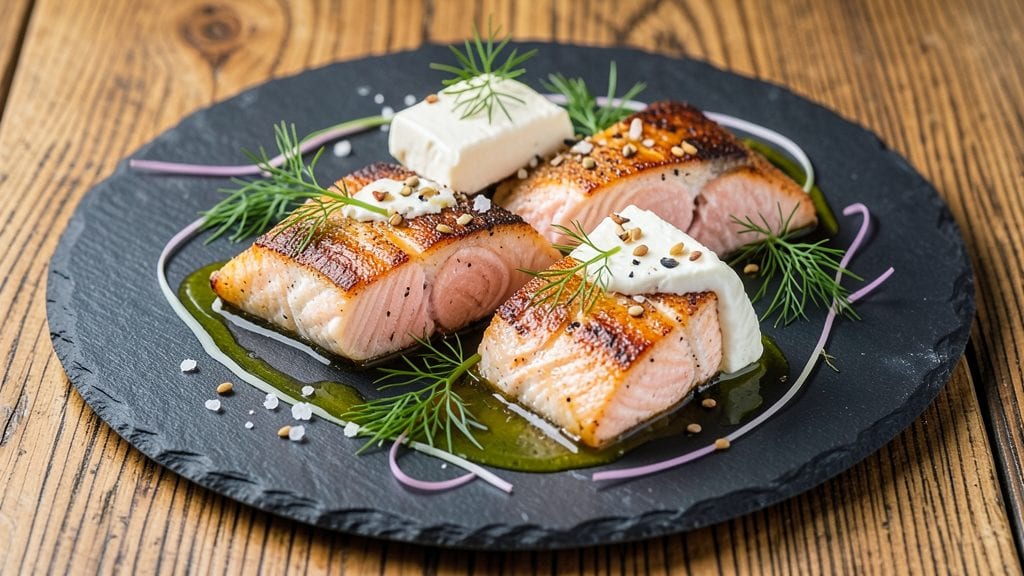
This crispy pan-seared salmon with soft cheese delivers the perfect balance of textures and flavors—golden, flaky fish with a melted center of creamy cheese that transforms an appetizer into an unforgettable bite.
The secret lies in precise timing: searing the salmon just until it reaches 125°F internally while keeping the cheese warm enough to soften beautifully without overcooking the fish.
I developed this recipe after testing countless combinations to achieve that restaurant-quality crunch and melt. The key is using a high-heat pan for the salmon while keeping the cheese (like brie or goat cheese) at room temperature—this ensures it melts smoothly rather than curdling.
A squeeze of lemon brightens the dish, cutting through the richness while herbs like dill or chives add freshness.
What you’ll end up with is a visually stunning appetizer that’s as impressive to serve as it is to eat—crispy salmon edges, a creamy, gooey cheese center, and a garnish of fresh herbs that ties everything together.
The dish pairs perfectly with a simple arugula salad or crusty bread to soak up any extra cheese sauce.
This recipe is designed for effortless plating: serve the salmon on a bed of greens or directly on a slice of toasted baguette, drizzled with a touch of olive oil.
The contrast of temperatures—warm, melty cheese against cool, crispy salmon—makes every bite feel like a luxurious bite-sized meal. Let’s get cooking!
Ingredients for salmon and soft cheese
Twelve ingredients transform into restaurant-quality salmon with melty cheese perfection.
| Ingredient | Amount | Notes |
|---|---|---|
| Center-Cut Atlantic Salmon Fillets 🐟 | 4 whole | Skin-on, 6-8 oz each, patted dry |
| Brie Cheese 🧀 | 8 oz | Rounded loaf, room temperature |
| Unsalted Butter 🧈 | ½ cup | Cold, cut into 1-inch pieces |
| Fresh Dill 🌿 | ¼ cup | Chopped, stems removed |
| Fresh Chives 🌱 | 2 tbsp | Finely chopped, for garnish |
| Extra-Virgin Olive Oil 🫒 | 2 tbsp | High-quality, fruity variety |
| Lemon Juice 🍋 | 1 ½ tbsp | Freshly squeezed |
| Diamond Crystal Kosher Salt 🧂 | 1 tsp | Fine grain preferred |
| Freshly Ground Black Pepper 🌶️ | ½ tsp | Coarse grind |
| All-Purpose Flour 🌾 | 2 tbsp | For dredging salmon |
| Baguette Slices 🍞 | 4 whole | Toasted, for serving |
| Baby Arugula 🥬 | 2 cups | For bedding salmon |
The salmon selection is critical—center-cut Atlantic fillets provide the best texture for crispy edges while maintaining flakiness. Whole Foods or high-end seafood markets carry the finest cuts; look for vibrant color and firm flesh that springs back when pressed. Brie should be a creamy, bloomy-rind variety—avoid pre-sliced options as they lack the proper texture. For the butter, Plugrá or Land O'Lakes unsalted are reliable choices, but European-style butter like Bergère elevates the dish further. Fresh herbs should be bright green and fragrant—dill and chives from the grocery store's refrigerated section work, but farmers' markets offer superior quality.
No brie? Goat cheese or Camembert work beautifully—just ensure they're soft and spreadable at room temperature. Substitute the butter with ghee or duck fat for a richer flavor profile, though texture may vary slightly. If fresh dill isn't available, dried dill at one-third the amount suffices, though fresh is preferred for that bright herbal note. For the flour dredge, cornstarch or panko can be used instead, creating a different but equally satisfying crust. The lemon juice can be swapped for white wine vinegar if preferred, though fresh lemon adds a necessary acidity balance.
Prep the salmon and cheese ahead of time—room temperature components ensure even cooking. Store the salmon, wrapped in paper towels, in the fridge for up to 24 hours before cooking. Brie can be kept at room temperature for 2 hours before use, but refrigerate any remaining portions. The cooked salmon holds well for 2 days in the fridge, though the cheese will firm up slightly. Reheat gently in a skillet with a splash of water to restore its creamy texture. For presentation, assemble on toasted baguette slices or a bed of arugula just before serving to maintain crispness.
Why You'll Love This Recipe
- One-Pan Magic: I swear by this for nights when I just want to open the fridge and call it dinner. The salmon and Brie melt together on the same sheet pan—no chopping boards, no extra pots—just butter, herbs, and 15 minutes of hands-off time.
- Creamy Crisp Contrast: That buttery Brie oozing over the flaky salmon while the edges get a golden crust? It’s the kind of bite that makes you pause mid-fork. The dill and chives cut through the richness just enough to keep it bright and satisfying.
- Weeknight to Weekend: Honestly, this works for everything. Toss it on a charcuterie board for guests, pack the leftovers in wraps for lunch, or serve it over greens for a fancier dinner—no one ever questions what’s for dinner.
- Leftovers That Don’t Suck: Between us, most salmon leftovers turn into sad, dry fish. Not this. The Brie keeps it moist, and the butter adds richness, so it reheats like a dream. I’ve even frozen portions—just add a splash of cream when thawing, and it’s still restaurant-quality.
Step-by-step instructions for crispy pan-seared salmon with brie
Here's the method to achieve perfectly crispy salmon skin with a luxuriously melty brie center.
Prepare the Salmon and Seasoning
Pat the 4 whole center-cut Atlantic salmon fillets completely dry with paper towels, pressing firmly to remove all moisture. This step is critical for achieving crispy skin—any remaining moisture will steam the fillets instead of creating that coveted crust. Place the fillets skin-side down on a cutting board.
In a small bowl, combine the 2 tablespoons all-purpose flour, 1 teaspoon diamond crystal kosher salt, and 0.5 teaspoon freshly ground black pepper. Lightly dredge each salmon fillet in this mixture, pressing gently to adhere the seasoning evenly to both sides. The flour creates a delicate crust that enhances browning while the salt and pepper penetrate the flesh for balanced seasoning.
Create the Butter-Dill Compound
In a separate bowl, combine the 0.5 cup cold unsalted butter (cut into 1-inch pieces), 0.25 cup chopped fresh dill, 1.5 tablespoons freshly squeezed lemon juice, and 1 tablespoon extra-virgin olive oil. Mix gently with a fork until the butter begins to soften slightly but remains cool to the touch. This compound will infuse the salmon with herbaceous depth while preventing dryness.
Real talk: The butter should be cold when you begin cooking. If it melts prematurely, chill the mixture for 10 minutes before proceeding. The cold butter creates a protective barrier that locks in moisture while promoting even browning.
Sear the Salmon to Crispy Perfection
Heat a large skillet over medium-high heat until it's properly preheated—you should see a gentle shimmer when you sprinkle a few drops of water. Add the salmon fillets skin-side down and cook undisturbed for 4-5 minutes until the skin is deep golden brown and crispy. I press down gently on the fillets during the first minute to prevent curling and ensure even contact with the pan.
Once the skin is crispy, carefully flip the fillets and immediately add the butter-dill compound to the pan. Spoon the melted butter mixture evenly over the salmon, then reduce heat to medium. Cook for an additional 2-3 minutes until the salmon reaches an internal temperature of 125°F—just shy of fully cooked to maintain a tender center.
Assemble with Melty Brie and Fresh Herbs
While the salmon cooks, prepare the brie by slicing the 8 oz rounded loaf into 4 equal portions, each roughly 2 ounces. Toast the 4 baguette slices in a dry skillet over medium heat for 2 minutes per side until golden and crisp. Arrange the 2 cups baby arugula on serving plates to create a fresh bed for your salmon.
Remove the salmon from the pan and place each fillet on a bed of arugula. Top each fillet with a slice of brie, then return the salmon to the skillet for 30-45 seconds until the brie begins to soften and melt. Garnish immediately with the remaining 1 tablespoon extra-virgin olive oil and 2 tablespoons finely chopped fresh chives. The contrast of crispy salmon skin, creamy brie, and peppery arugula creates a harmonious bite.
Serve Immediately with Crispy Baguette
Transfer each salmon fillet to a toasted baguette slice, arranging the arugula underneath to catch any melting brie. Serve immediately while the salmon is still warm and the brie maintains its luxurious melt. The crispy baguette provides the perfect textural contrast to the tender salmon and creamy cheese.
This dish delivers on the crispy promise through careful temperature control and proper preparation. The butter-dill compound ensures moisture retention while the flour coating creates that coveted crust. Each bite should offer a symphony of textures—crispy skin, tender salmon, creamy brie, and fresh herbs—all coming together in perfect harmony.
Pro Tips For Making Salmon And Soft Cheese
- CRISP THE SKIN FIRST: Pat the salmon fillets bone-dry with paper towels, then hit them with a hot, dry skillet for 30 seconds per side before adding butter. The skin will crisp up like a perfect parchment—no more flaking or sad, limp edges. (Yes, even if you’re impatient like me, resist the urge to rush this.)
- SALT THE BRIE: Sprinkle a pinch of flaky salt over the Brie before it hits the pan. The cheese melts faster and develops a subtle, caramelized edge that cuts through the richness. I learned this the hard way—plain Brie just pools into a sad, greasy puddle.
- DON’T OVERCOOK THE DILL: Toss fresh dill into the pan only in the last 30 seconds of cooking. Any longer, and it turns bitter and slimy—trust me, you’ll taste the difference. Chives, on the other hand, can handle a little more time but still play it safe.
- USE COLD BUTTER: Take the unsalted butter straight from the fridge and let it sit in small cubes while the salmon sears. Cold butter creates steam, keeping the salmon moist instead of turning it into a dry, buttery brick. (Your future self will thank you.)
Storing and reheating this salmon and soft cheese
Refrigerator Storage
Store cooked salmon with brie in an airtight container for up to 2 days in the refrigerator. I recommend glass Pyrex containers with snap-on lids to maintain freshness.
Place the salmon skin-side down to preserve its crispiness, and cover the cheese with a parchment paper barrier to prevent it from absorbing fridge odors. 🥬
Freezer Preservation
For longer storage, freeze the assembled dish for up to 1 month in a freezer-safe bag with excess air removed. I use quart-sized Ziploc bags for individual portions. Thaw overnight in the fridge before reheating—never microwave directly from frozen, as this can make the salmon rubbery. 🧊
Gentle Reheating
Reheat in a non-stick skillet over medium-low heat for 3-4 minutes with 1 tablespoon water to restore moisture. Cover with a lid to melt the brie evenly. Avoid high heat—it can dry out the salmon or overcook the cheese. A splash of lemon juice during reheating revives brightness. 🔥
Microwave Method
For quick reheating, use the defrost setting for 1-2 minutes on 50% power. Cover loosely with a paper towel to prevent splattering. The brie may firm up slightly—spritz with warm water and let sit for 30 seconds to restore creaminess. This method works best for single servings. ⏳
Reviving Crispiness
If the salmon loses crispiness after storage, re-crisp the skin in a dry skillet for 30 seconds before serving. Add a pat of cold butter to the pan to restore that golden sheen. The brie will soften again with the residual heat—perfect for a quick second serving. 💫
Cheese Handling
If the brie hardens during storage, let it sit at room temperature for 10-15 minutes before reheating. For extra creaminess, top with a thin slice of warm baguette during reheating—it absorbs moisture and adds texture. Avoid reheating brie in the microwave alone, as it can curdle. 🧀
Nutrition facts
Frequently asked questions
Can I substitute brie with another soft cheese?
Goat cheese or Camembert work beautifully—they melt just as creamy. For a tangier twist, try herb-infused goat cheese, or for extra richness, use triple cream brie. Just ensure the cheese is soft and spreadable at room temperature before cooking.
Why does my salmon skin keep curling up?
Curling happens when the salmon isn't properly prepped. Pat the fillets completely dry and press down gently with a spatula during the first 1-2 minutes of cooking. A hotter pan (medium-high heat) also helps prevent curling by creating an immediate crust.
How do I keep the cheese from burning?
Add the cheese only after the salmon is seared and flipped—this way, it melts gently with residual heat. If using a high-heat pan, reduce to medium-low once the cheese is added. A quick 30-second cover with a lid helps melt it evenly without burning.
Can I make this ahead of time?
Prep the salmon and cheese separately, but assemble and cook fresh for best results. The salmon loses crispiness when reheated, but you can store components separately: cook the salmon, chill, then add the cheese just before serving. For a make-ahead appetizer, try baking the salmon with cheese and serving cold.
What’s the best way to serve this?
For an elegant touch, serve on toasted baguette slices or a bed of arugula with a drizzle of olive oil. Pair with a crisp white wine like Sauvignon Blanc or a sparkling rosé to complement the creamy, herby flavors. The contrast of warm salmon and cool greens makes it visually stunning.