Appetizers
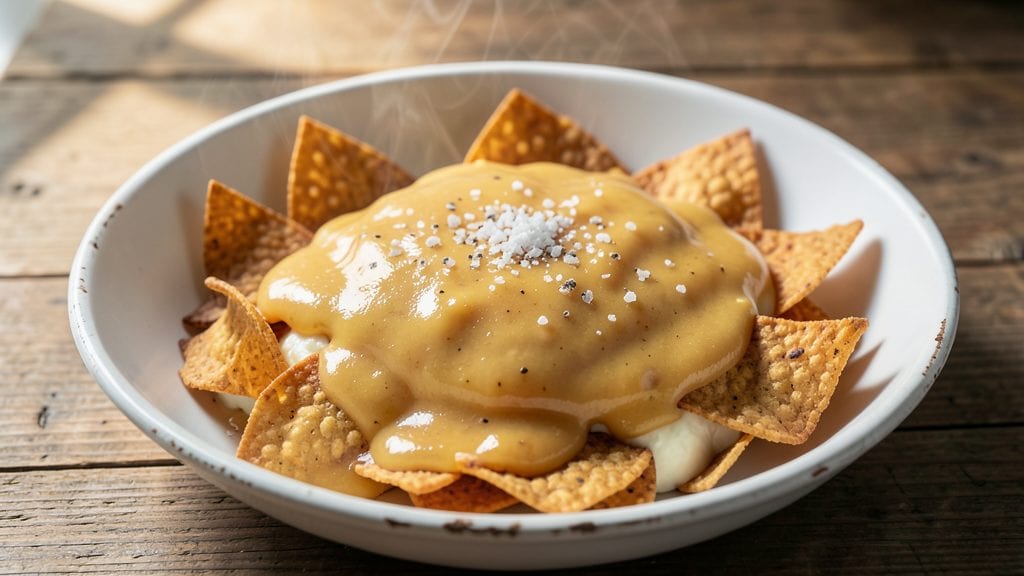
This nachos cheese recipe transforms your stovetop into a cheesy wonderland without the usual 30-minute wait for oven-baked perfection. The secret lies in a precise blend of cheddar and Monterey Jack, melted just enough to coat every chip in velvety, stretchy goodness—no lumps, no waiting, just instant party-ready nachos.
I perfected this method after years of watching cheese sauce turn into gluey disappointment, and it never fails to deliver that perfect, gooey consistency.
What makes this recipe stand out is the foolproof melting technique that creates a sauce so smooth it clings to chips like a second skin. You’ll need just five simple ingredients—no fancy equipment beyond a saucepan and an immersion blender (or whisk if you’re old-school).
The key is low-and-slow melting with a splash of milk to prevent burning, followed by a quick blend for that signature nacho cheese texture. This isn’t your childhood’s sad, clumpy cheese disaster—it’s restaurant-quality every time.
By the time you’re done, you’ll have a bubbling, golden-brown cheese sauce that transforms ordinary tortilla chips into a crispy, cheesy masterpiece.
The sauce stretches effortlessly, coating each chip in a blanket of melty cheddar that holds up to toppings like jalapeños, black beans, or pulled pork without turning soggy.
Serve it immediately for the best texture, or keep it warm in a slow cooker for a crowd—this recipe scales perfectly for game day or movie nights.
For extra flair, top with fresh cilantro, diced tomatoes, or a sprinkle of smoked paprika before serving. The contrast of crispy chips, creamy cheese, and fresh toppings makes this dish impossible to resist.
Whether you’re feeding a hungry football team or just craving a solo snack attack, this nachos cheese recipe delivers professional results in under 15 minutes—no shortcuts, just smart technique.
Ingredients for nach cheese
Five simple ingredients transform into velvety nacho cheese that clings perfectly to every chip.
| Ingredient | Amount | Notes |
|---|---|---|
| Sharp Cheddar Cheese 🧀 | 2 cups | Shredded, block preferred over pre-shredded |
| Monterey Jack Cheese 🧀 | 1 cup | Shredded, mild flavor balance |
| Whole Milk 🥛 | ¼ cup | Full-fat for creaminess |
| Butter 🧈 | 2 tbsp | Unsalted, for smooth melting |
| Tortilla Chips 🍟 | 4 cups | Sturdy, blue corn or plain |
| Salt 🧂 | ½ tsp | Diamond Crystal preferred |
| Black Pepper 🌶️ | ¼ tsp | Freshly cracked for aroma |
| Garlic Powder 🧄 | ½ tsp | For subtle depth |
| Onion Powder 🧅 | ½ tsp | Enhances savory profile |
| Cayenne Pepper 🔥 | ⅛ tsp | Optional, for heat |
The cheese blend is non-negotiable for that signature nacho texture. Block cheddar and Monterey Jack shred far better than pre-shredded (which contains anti-caking agents that prevent smooth melting). Kroger's private-label cheddar or Sargento Natural are reliable grocery store options, while Cabot takes it to the next level. For the milk, whole milk adds richness—skim won't give the same luxurious finish. The butter acts as an emulsifier, so don't skip it. Pro tip: shred the cheese yourself using the large holes on your box grater for even melting.
No sharp cheddar? Pepper Jack at half the quantity adds heat without overpowering. Out of Monterey Jack? Colby cheese works in a pinch, though it's slightly softer. For the milk, half-and-half or heavy cream can replace whole milk (reduce by 2 tbsp). The spices are flexible—smoked paprika instead of onion powder gives a smoky twist. Want extra stretch? Add 1 tbsp cornstarch to the cheese blend before melting. And if you're serving a crowd, double the recipe—this sauce scales perfectly without separating.
This cheese sauce stays creamy for 2-3 hours in a slow cooker on warm setting, making it ideal for game day. For single servings, portion into ice cube trays and freeze—perfect for topping individual nacho plates later. Store leftovers in an airtight container with a thin layer of milk on top to prevent skin formation. Reheat gently over low heat, stirring constantly to avoid graininess. The sauce reheats beautifully but loses crispness if kept too long—serve immediately after melting for optimal texture.
Why You'll Love This Recipe
- No-Mess Magic: I swear by this recipe because it’s the kind of thing I can make while chatting with friends—just melt the cheddar and Monterey Jack with butter and milk until it’s silky smooth, then pour it over chips. No blender, no fuss, just pure, gooey perfection.
- Creamy Crunch Harmony: That perfect blend of sharp cheddar and mild Monterey Jack? It’s like a flavor hug—salty, tangy, and just rich enough to make every chip bite feel special. The butter and milk take it from good to oh-wow without overpowering.
- Party in a Bowl: Between us, this is my go-to for game days, movie nights, or when I need to feed a crowd without stressing. Double the batch, keep it warm in a slow cooker, and suddenly you’re the hero of the hour. (Yes, even on a Tuesday night.)
- Budget Stretch: Sharp cheddar and Monterey Jack are affordable staples, and a little butter and milk stretch this recipe farther than store-bought cheese sauce. Plus, it’s one of those dishes that tastes even better the next day—so leftovers? Never a problem.
Step-by-step instructions for nachos cheese recipe
Master the art of silky, melt-in-your-mouth nacho cheese with this foolproof stovetop method.
Prepare the Cheese Base
In a medium saucepan, combine the 2 cups sharp cheddar cheese and 1 cup Monterey Jack cheese. I use block cheese for this recipe because it melts more smoothly than pre-shredded varieties. Cut the cheeses into small cubes for even melting and faster heat distribution.
Add the 2 tablespoons unsalted butter to the saucepan and place it over medium heat. The butter should melt completely before adding any liquid ingredients. This creates a rich foundation that prevents the cheese from becoming grainy as it melts.
Once the butter is fully melted and the cheese begins to soften, reduce the heat to low. This gentle approach prevents the cheese from seizing up or developing a skin on top. Watch closely as the cheese transforms from solid to liquid—you'll see it become glossy and smooth.
Incorporate Seasonings and Liquids
Add the 0.5 teaspoon salt, 0.25 teaspoon black pepper, 0.5 teaspoon garlic powder, 0.5 teaspoon onion powder, and 0.125 teaspoon cayenne pepper to the saucepan. Stir continuously for 30 seconds to ensure even distribution of these flavors throughout the cheese mixture.
Next, pour in the 0.25 cup whole milk slowly while stirring constantly. The milk should warm up immediately as it mixes with the melted cheese. This step is crucial because the milk adds creaminess and prevents the cheese from becoming too thick or developing a film on top.
Continue stirring over low heat for 2-3 minutes until the mixture becomes completely smooth and velvety. You're looking for a consistency that coats the back of a spoon without being overly thick. If it starts to thicken too much, add an additional 1 tablespoon of milk to loosen it.
Achieve Perfect Melting Temperature
Remove the saucepan from heat once the cheese reaches 170°F on an instant-read thermometer. This temperature ensures the cheese is fully melted but not overheated, which could cause it to separate or develop a rubbery texture. The mixture should now be smooth, glossy, and ready to coat your chips perfectly.
Here's the thing—don't let the cheese boil or bubble vigorously. If you see any signs of scorching or separation, immediately remove the pan from heat and stir vigorously. The ideal melted cheese should be silky and homogeneous, with no visible lumps or streaks of unmelted cheese.
Keep the cheese warm in the saucepan by placing it over a pot of barely simmering water (double boiler method) if you're not using it immediately. This maintains its creamy texture without overcooking it.
Assemble and Serve
Spread the 4 cups tortilla chips evenly on a large platter or baking sheet. The chips should be arranged in overlapping layers to create a sturdy base that can hold the cheese without breaking. I like to use sturdy blue corn chips for this because they hold up better to the weight of the cheese.
Using a ladle or spoon, generously pour the melted cheese mixture over the chips. Start from the center and work your way outward to ensure even coverage. The cheese should pool slightly in the layers, creating that classic nacho effect when served.
For best results, serve immediately while the cheese is still warm and gooey. The contrast between the crispy chips and the smooth, melted cheese is what makes nachos so irresistible. If you need to hold them for a short time, cover the platter loosely with aluminum foil to keep the chips from getting soggy.
Pro Tips For Making Nach Cheese
- Grate Cheese Fresh: Skip the pre-shredded stuff—it’s packed with anti-caking agents that make nacho cheese grainy and clumpy. Use a box grater on sharp cheddar and Monterey Jack right before melting, and you’ll get that smooth, stretchy texture every time.
- Melt Butter First: Don’t just toss cold butter into the milk—melt it separately over medium-low heat until it’s fully liquid and foamy. This ensures the cheese melts evenly instead of clumping like a sad, lumpy mess.
- Watch the Heat: Low and slow is your friend here. Too much heat turns nacho cheese into a greasy, rubbery disaster. Keep the sauce simmering gently—just enough to see tiny bubbles breaking the surface, not a full-on boil.
- Save the Chips: Don’t dump all the chips in at once—keep a handful aside for dipping. Fresh, crispy chips make the difference between a good nacho cheese and a great one, and you’ll want that first bite to be perfect.
Best sauces and condiments for nach cheese
Classic Salsa Roja
This vibrant red salsa cuts through the richness of nacho cheese with its bright acidity and fresh flavors.
I blend 2 cups diced Roma tomatoes, ½ cup red onion, 1 jalapeño (seeds removed for mild heat), ¼ cup cilantro, 1 tablespoon lime juice, and ½ teaspoon salt in a food processor until chunky.
The lime juice is key—it balances the cheese's creaminess while adding a tangy kick. Serve chilled or at room temperature for the best contrast. 🌶️
Creamy Avocado Ranch
For a cooling counterpoint, whip up this avocado ranch by blending 1 ripe avocado, ½ cup sour cream, ¼ cup mayonnaise, 1 tablespoon ranch seasoning, 1 tablespoon lime juice, and 2 tablespoons chopped cilantro.
The avocado adds a velvety texture that softens the cheese's intensity while keeping the dish light. Drizzle lightly over nachos or serve on the side for dipping. This sauce stays fresh for 2 hours when refrigerated in an airtight container.
Spicy Chipotle Crema
Elevate your nachos with this smoky-sweet crema made from ½ cup sour cream, 2 tablespoons mayonnaise, 1 tablespoon adobo sauce (from canned chipotles), 1 teaspoon honey, and ½ teaspoon smoked paprika. The adobo sauce provides deep, smoky heat that pairs perfectly with the cheese's sharpness.
Blend until smooth and drizzle generously over assembled nachos. For extra richness, add 1 tablespoon crumbled queso fresco at the end. 🔥
Pickled Red Onions
Quick-pickle 1 cup thinly sliced red onions in a mix of ½ cup apple cider vinegar, 1 tablespoon sugar, and ½ teaspoon salt for 15 minutes. The onions develop a crisp texture and tangy sweetness that cuts through the cheese's richness.
Drain well before serving to avoid soggy chips. I like to sprinkle them over the cheese just before serving to maintain their crunch. This topping adds a refreshing bite that balances the dish perfectly.
Fresh Pico de Gallo
This classic topping keeps things bright and fresh with 3 cups diced tomatoes, ½ cup diced cucumber, ½ cup finely chopped red onion, ¼ cup chopped cilantro, 2 tablespoons lime juice, and ½ teaspoon salt.
Let it sit for 10 minutes before serving to allow flavors to meld. The acidity from the lime prevents the cheese from overwhelming the palate, while the crunch adds texture contrast. Serve immediately for the best flavor and texture. ✨
Smoky Chipotle BBQ Sauce
For a bold, smoky twist, simmer ½ cup BBQ sauce (like Sweet Baby Ray's Original), 1 tablespoon adobo sauce, and 1 teaspoon smoked paprika in a small saucepan for 5 minutes until thickened. Drizzle lightly over nachos or use as a dipping sauce for extra flavor.
The smoky depth complements the cheese's sharpness while adding a sweet-spicy note. This sauce can be made ahead and reheated gently before serving.
Nutrition facts
Frequently asked questions
Why does my nacho cheese sauce get grainy when melting?
Grainy texture happens when cheese overheats or contains anti-caking agents (common in pre-shredded cheese). Always use block cheese shredded yourself, and melt over low heat with constant stirring. The milk in this recipe helps prevent clumping by keeping the cheese smooth and emulsified.
Can I make nacho cheese without milk?
Yes, but the texture will be thicker and less creamy. Replace the milk with 1 tablespoon cornstarch mixed with 2 tablespoons water for a smooth consistency. The cornstarch acts as a binder, though the sauce won't stretch as beautifully. For best results, stick with the milk in the original recipe.
How do I keep nachos crispy when adding toppings?
Assemble nachos in layers: chips first, cheese second, then toppings like jalapeños or beans. Keep the cheese warm in a slow cooker on low heat while adding toppings. Serve immediately—cheese and toppings should be added just before eating to maintain crispness. For extra crunch, bake assembled nachos for 2-3 minutes at 350°F right before serving.
What's the best cheese substitute if I don't have Monterey Jack?
Use Colby cheese (1:1 ratio) for a milder flavor, or Pepper Jack (reduce by ½ cup) for heat. Avoid mozzarella—it's too soft and won't stretch properly. For a dairy-free option, try nutritional yeast blended with vegan cheese shreds, but texture will differ. Always shred block cheese fresh for best results.
Can I make nacho cheese in the microwave?
Microwaving risks uneven heating and rubbery texture. If you must, use 30-second intervals on low power, stirring between each interval. For best results, stick with stovetop melting—it gives you precise temperature control and that signature velvety consistency. The double boiler method (slow cooker on low) is the next best microwave alternative.