Main Courses
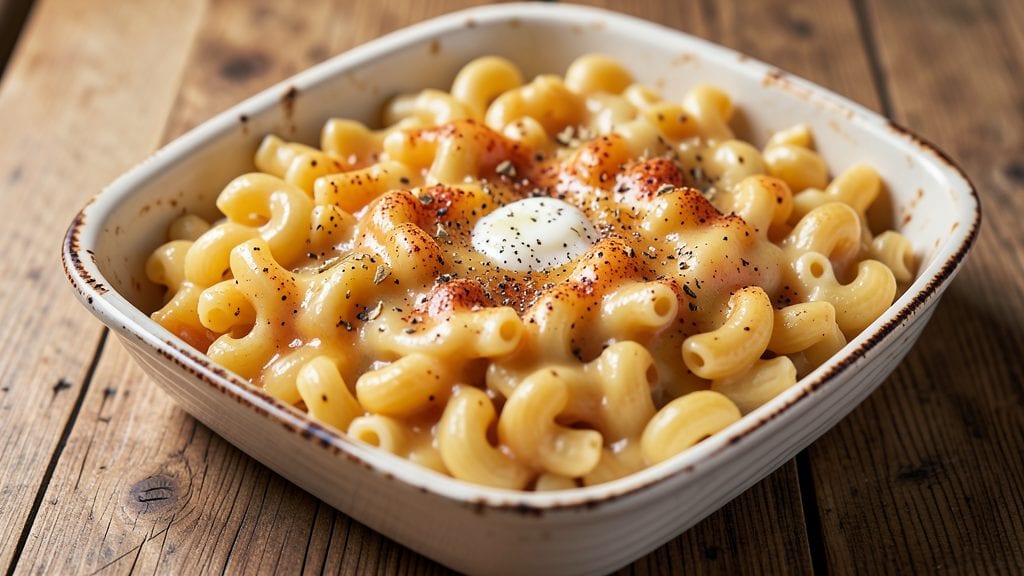
Grandma's mac and cheese recipe is the kind of dish that transforms a simple weeknight into a celebration of comfort food.
The secret lies in that perfect balance of a golden crust on top and silky swirls inside, where the cheese melts into a creamy, velvety sauce that clings to every strand of pasta.
I remember the first time I tasted my grandmother's version—still warm from the oven, with that irresistible aroma filling the kitchen.
What makes this recipe special is the foolproof technique that ensures the cheese sauce never breaks, even after baking. The foundation starts with a rich roux made from butter and flour, which creates a stable base for the cheese to melt into.
I use a blend of sharp cheddar and Gruyère for depth, while a touch of cream cheese adds that extra creaminess that makes this mac and cheese truly unforgettable.
By the time it comes out of the oven, you'll have a dish that's crispy on the outside, tender on the inside, and packed with that cheesy goodness that makes it impossible to stop at just one serving.
The breadcrumb topping adds a satisfying crunch, while the sauce remains rich and creamy, coating every bite of perfectly cooked elbow macaroni.
This is the kind of mac and cheese that brings people together—whether it's for a family dinner, a holiday gathering, or just a cozy night in. Here's how to make it the way grandma would, with love and a little extra care.
Ingredients for grandma's mac and cheese
Pantry staples meet cheesy perfection—this mac and cheese needs just 14 ingredients for golden crust and silky swirls.
| Ingredient | Amount | Notes |
|---|---|---|
| Elbow Macaroni 🍝 | 1 ½ lbs | Medium or elbow shape preferred |
| Unsalted Butter 🧈 | ¾ cup | Cold, cubed for roux |
| All-Purpose Flour 🌾 | ¾ cup | Sifted for smooth sauce |
| Sharp Cheddar Cheese 🧀 | 2 cups | Shredded, block preferred |
| Gruyère Cheese 🧀 | 1 cup | Shredded, nutty flavor |
| Cream Cheese 🧀 | 4 oz | Full-fat for creaminess |
| Whole Milk 🥛 | 2 cups | Warm for smooth sauce |
| Yellow Mustard 🍯 | 1 tbsp | Dijon works too |
| Salt 🧂 | 1 ½ tsp | Adjust to taste |
| Ground Black Pepper 🌶️ | ½ tsp | Freshly ground preferred |
| Garlic Powder 🧄 | ½ tsp | For subtle depth |
| Panko Breadcrumbs 🍞 | ½ cup | For crispy topping |
| Extra-Virgin Olive Oil 🫒 | 2 tbsp | For breadcrumb mix |
| Fresh Parsley 🌿 | ¼ cup | Chopped, for garnish |
The cheeses are non-negotiable here. Sharp cheddar gives that classic tang, but Gruyère adds nutty depth—don't skip it. I always grab block cheddar from the deli counter (pre-shredded gets clumpy), and Gruyère from specialty cheese shops if I'm feeling fancy. The cream cheese? Full-fat only—it keeps the sauce silky after baking. For the pasta, elbow macaroni (or cavatappi) holds sauce best. If you're in a pinch, penne or rotini works too, just cook it a minute less.
No Gruyère? Parmesan or fontina in a pinch—both add richness. Short on cheddar? Monterey Jack stretches it out. The mustard is key—Dijon or whole-grain both work, but skip it if you're sensitive to tang. For the breadcrumbs, panko gives the best crunch, but regular breadcrumbs toasted in the oven work too. The parsley is just for garnish, but it brightens up the dish—dried works if you're out, though fresh is prettier. And trust me on the full-fat cream cheese—low-fat makes the sauce grainy after baking.
This keeps 4-5 days in the fridge, but honestly, it's even better reheated. For leftovers, cover tightly and microwave with a splash of milk to restore creaminess. The breadcrumb topping gets soggy if you store it covered, so re-crisp in the oven before serving. Freezes beautifully for up to 3 months—just bake straight from frozen with an extra 10 minutes. I always make a double batch because it disappears fast.
Why You'll Love This Recipe
- No-Fuss Pantry Staples: I’ll bet you already have everything. Elbow mac, butter, flour—those are basics. Toss in sharp cheddar and Gruyère, and boom, you’re golden. No last-minute grocery runs, no weird ingredients you’ll never use again.
- Creamy Crispy Magic: That roux? Oh, it’s everything. The flour-butter base thickens into a velvety sauce while the top browns into a crispy, cheesy crust. Sharp cheddar melts into gooey perfection, and Gruyère adds that nutty depth—like a hug in a bowl.
- Weeknight to Crowd-Pleaser: Make it for two or ten. Double the batch, freeze half for lazy days. Serve it at game nights, potlucks, or even as a fancy side for steak. My kids beg for it after school, and my husband’s coworkers ask for seconds at work parties.
- Leftovers That Don’t Suck: Honestly, the best part? The next-day version. The cheese pulls tighter, the noodles soften just right, and it reheats in minutes. Pack it for lunch or save it for dinner—no sad, soggy mac here. Plus, it’s cheap enough to make twice in one week.
Step-by-step instructions for grandma's mac and cheese
Here's how to create that perfect baked mac and cheese with a golden crust and creamy interior.
Cook the Elbow Macaroni to Al Dente Perfection
Bring a large pot of water to a rolling boil and add the 1.5 lbs elbow macaroni. Stir once to prevent sticking, then cook until 1 minute before the package directions specify for al dente. This ensures the pasta finishes cooking in the oven while absorbing the cheese sauce. Reserve 1 cup of pasta water before draining - this starchy liquid is essential for creating a smooth sauce later.
Drain the pasta and return it to the pot. Toss with 1 tablespoon yellow mustard to give the cheese sauce that signature tang. I like to do this right away while the pasta is still hot - it helps distribute the flavor evenly throughout the dish. The mustard might seem like a small addition, but it makes a big difference in the final taste, balancing the richness of the cheese.
Prepare the Creamy Cheese Sauce
In a large Dutch oven or heavy pot, melt the 0.75 cup unsalted butter over medium heat. Once melted and foaming, whisk in the 0.75 cup all-purpose flour to form a smooth roux. Cook for 2-3 minutes until the mixture bubbles and turns a light golden color. This step is crucial - it removes the raw flour taste and creates the base for your sauce.
Gradually whisk in the 2 cups whole milk over 2-3 minutes, ensuring no lumps form. Stir constantly until the mixture thickens enough to coat the back of a spoon. Remove from heat and stir in the 2 cups sharp cheddar cheese, 1 cup gruyère cheese, and 4 oz cream cheese until completely melted and smooth. The sauce should be thick but still pourable - if it's too thick, whisk in some of the reserved pasta water, 1 tablespoon at a time.
Combine Pasta and Sauce
Add the drained, mustard-tossed pasta to the cheese sauce and stir gently to coat every noodle. The sauce should cling to the pasta beautifully, creating those classic swirls. Season with 1.5 teaspoons salt, 0.5 teaspoon ground black pepper, and 0.5 teaspoon garlic powder. Taste and adjust seasoning if needed - this is your chance to perfect the flavor before baking.
Transfer the mixture to a 9x13-inch baking dish and spread it evenly. The dish shouldn't be overfilled - leave about ½ inch of space at the top for the breadcrumb topping. Smooth the top with a spatula for an even surface. This step is important for even baking and that perfect golden crust we're aiming for.
Prepare and Add the Crispy Topping
In a small bowl, combine the 0.5 cup panko breadcrumbs with 2 tablespoons extra-virgin olive oil and 0.25 cup chopped fresh parsley. Mix well until the breadcrumbs are evenly coated. Sprinkle this mixture evenly over the top of the mac and cheese, pressing down gently to help it adhere.
Bake at 375°F for 25-30 minutes until the top is deep golden brown and the edges are bubbling. The cheese sauce should be heated through but still creamy - it will continue cooking slightly after removal from the oven. Here's the thing - don't overbake. You want that crispy crust but still creamy interior. The dish is ready when it's golden on top but still jiggly in the center.
Rest and Serve
Remove from the oven and let the mac and cheese rest for 5-10 minutes before serving. This resting period allows the cheese to set slightly and makes it easier to slice. The dish will be hot but the cheese will have thickened just enough to hold its shape when served.
Cut into squares and serve immediately. The contrast between the crispy golden top and creamy cheese interior is what makes this dish so special. Each bite should deliver that perfect combination of textures and flavors - rich cheddar, nutty gruyère, and that subtle mustard tang that ties it all together. Leftovers? They're even better the next day when the cheese has had time to meld completely.
Pro Tips For Making Grandma'S Mac And Cheese
- Cook pasta al dente: DESCRIPTION: Grandma’s recipe counts on elbow macaroni holding its shape—overcooked noodles turn to mush. Pull them out when they’re still slightly firm, then let them sit in the colander for 30 seconds. That last bit of starch clings to the pasta, making the sauce cling better. Trust me, they’ll finish cooking in the cheese sauce.
- Melt cheese low and slow: DESCRIPTION: I used to rush the cheese sauce on high heat, and it’d either seize up or burn. Instead, melt the butter and flour into a roux until it’s a rich, golden paste—about 3-4 minutes on medium. Then, add the milk (or broth) gradually while stirring like your life depends on it. Once it thickens, drop the heat to low and let the cheeses melt in gently. No lumps, no stress.
- Grate cheese fresh: DESCRIPTION: Pre-shredded cheese is coated in anti-caking agents that make the sauce grainy. Skip it. Use a box grater or food processor for sharp cheddar and Gruyère—just don’t pulse too much, or you’ll turn it into cheese dust. And here’s the kicker: mix the cheeses halfway through cooking. The Gruyère melts faster, so adding it later keeps the texture smooth and the flavor balanced.
- Rest before serving: DESCRIPTION: This isn’t the prettiest step, but it’s non-negotiable. Once the cheese sauce is silky and the pasta’s coated, transfer everything to a greased baking dish. Tent it with foil and let it sit for 10 minutes. The residual heat keeps the cheese melting while the flavors marry. Serve it straight from the dish—no scraping bowls, no sad leftovers.
Serving suggestions for this grandma's mac and cheese
Classic Side Pairings
Serve this mac and cheese alongside a simple crispy roasted Brussels sprouts with bacon—just toss 1 lb Brussels sprouts with 2 tbsp olive oil, 4 slices cooked bacon, and ½ tsp smoked paprika, then roast at 425°F for 20 minutes.
The smoky, caramelized sprouts cut through the richness beautifully. 🥦
For a heartier meal, pair with garlic green beans sautéed in 1 tbsp butter and 1 minced garlic clove for 5 minutes. The bright acidity of the beans balances the creamy cheese sauce perfectly. I often serve this with a side of crusty sourdough bread for extra texture.
Protein Add-Ins
Add crispy fried chicken or smoked sausage for a Southern-style twist. I like using andouille sausage sliced into rounds and pan-fried until golden—just 8 oz sliced adds a smoky depth.
For a lighter option, top with grilled shrimp tossed in 1 tbsp lemon juice and ½ tsp Old Bay seasoning.
Vegetable Boosts
Stir in steamed broccoli florets or roasted cauliflower right before baking for extra nutrition. I use 2 cups chopped broccoli, steam until tender-crisp, then fold into the pasta mixture. The veggies soak up the cheese sauce while adding color and vitamins without overpowering the dish.
Garnish Like a Pro
Finish with toasted breadcrumbs mixed with 1 tbsp melted butter and ½ tsp garlic powder for extra crunch. I also sprinkle fresh parsley and a pinch of smoked paprika for color and aroma. For a fancy touch, add chopped chives or microgreens right before serving.
Drink Pairings
A bold red wine like Cabernet Sauvignon or Zinfandel complements the rich cheese flavors. For something lighter, try a crisp Chardonnay with buttery notes. I also love pairing this with a smoky IPA—the hop bitterness cuts through the creaminess. 🍷
Nutrition facts
Frequently asked questions
Why does this recipe use both cheddar and Gruyère?
The sharp cheddar gives that classic tangy flavor we all love, while the Gruyère adds nutty depth and a velvety texture. Together, they create a more complex, restaurant-quality sauce that melts perfectly. The Gruyère also helps prevent the sauce from becoming too heavy or grainy after baking.
Can I make this mac and cheese without baking?
Skip the breadcrumb topping and bake step, then simply assemble the pasta and cheese sauce in a serving dish. Cover with foil and let it sit for 10 minutes to thicken. The sauce will still be creamy, though you'll miss that perfect crispy crust. For extra richness, stir in 2 tablespoons butter at the end.
What's the secret to preventing a greasy sauce?
Low and slow heat is key! Never let the roux brown too dark, and whisk constantly when adding milk. The mustard helps emulsify the sauce, while the cream cheese adds creaminess without extra fat. If the sauce looks too thick, add reserved pasta water 1 tablespoon at a time until it reaches a smooth, pourable consistency.
How do I fix broken or grainy cheese sauce?
If your sauce separates, whisk in 1 tablespoon cold water or milk while stirring vigorously. For graininess, try blending the sauce briefly with an immersion blender (strain if needed). The mustard in this recipe actually helps prevent separation, but if it happens, a splash of warm milk usually brings it back together. Always keep heat low when melting cheese!
Can I use a different type of pasta?
Elbow macaroni is ideal because of its shape, but you can substitute with cavatappi, penne, or rotini. Avoid long pasta like spaghetti—it won't hold the sauce as well. If using a different shape, cook it 1 minute less than package directions since it'll finish cooking in the oven. The sauce will cling differently to each shape, creating unique textures!