Desserts
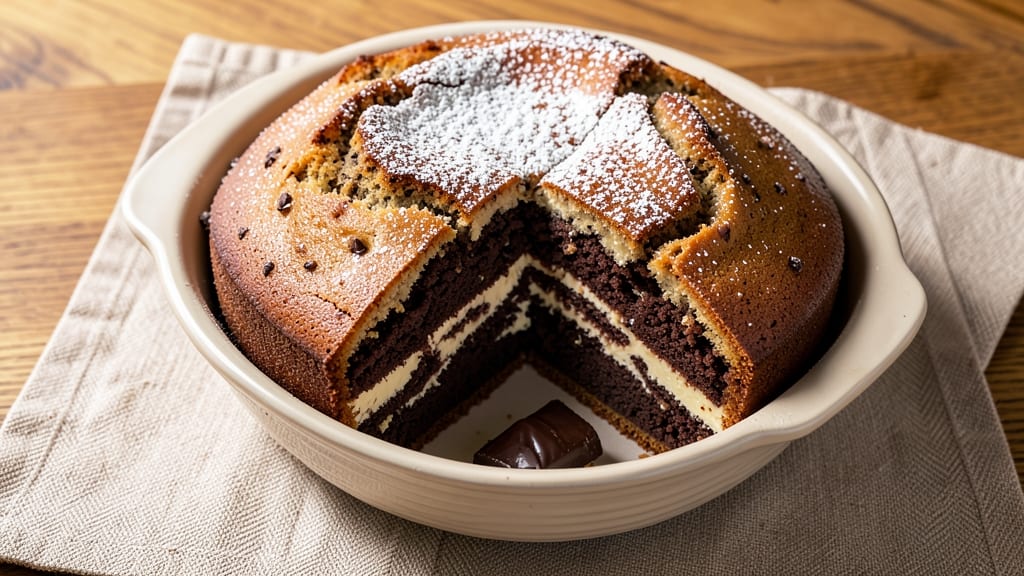
Gordon Ramsay’s chocolate cream cheese pound cake delivers the perfect balance of rich chocolate and velvety cream cheese swirls, all wrapped in a buttery crust that’s impossible to resist. This recipe captures his signature technique for achieving a moist, tender crumb with layers of decadent flavor—no professional kitchen required.
The secret lies in precise ingredient ratios and gentle folding to maintain that signature swirl effect.
What sets this pound cake apart is its professional-level texture: a dense yet tender crumb that stays moist for days, thanks to a combination of buttermilk and sour cream. The chocolate swirls cut through the cream cheese layers beautifully, creating a visual and textural contrast that’s both impressive and delicious.
Baking time is carefully timed to ensure even doneness without overcooking the delicate layers.
By the time you pull this cake from the oven, you’ll have a golden-brown masterpiece with a crackly buttery crust and layers of chocolate and cream cheese that practically melt in your mouth.
The aroma alone will have everyone gathering around your kitchen, and the first slice will confirm why this is a showstopper for any dessert table.
This recipe is designed for home bakers who want restaurant-quality results without shortcuts. Whether you serve it plain, dusted with powdered sugar, or topped with a simple glaze, the focus remains on the cake’s natural richness. Let’s get started on creating your perfect pound cake.
Ingredients for chocolate cream cheese pound cake gordon ramsay
Twelve ingredients, twelve layers of decadence. This is Ramsay’s secret to that signature swirl.
| Ingredient | Amount | Notes |
|---|---|---|
| All-Purpose Flour 🌾 | 4 cups | Sifted for light texture |
| Granulated Sugar 🍚 | 2 ½ cups | Divided for dry mix |
| Unsalted Butter 🧈 | 1 ½ cups | Cold, cubed for layers |
| Cream Cheese 🧀 | 16 oz | Full-fat, room temperature |
| Buttermilk 🥛 | 1 ½ cups | Cold for best texture |
| Sour Cream 🥛 | ½ cup | Full-fat preferred |
| Large Eggs 🥚 | 4 whole | Room temperature |
| Vanilla Extract 🌿 | 2 tsp | Pure, high-quality |
| Baking Powder 🧂 | 2 tsp | Aluminum-free |
| Salt 🧂 | 1 tsp | Fine sea salt |
| Unsweetened Cocoa Powder 🍫 | ½ cup | Natural, not Dutch-process |
| Semisweet Chocolate Chips 🍫 | 1 cup | High-quality, 60% cacao |
| Powdered Sugar 🍚 | ½ cup | For dusting |
The butter and cream cheese are non-negotiable here. Plugrá or Land O’Lakes are my go-tos for butter—nothing weird about them, just reliable. Cream cheese? Philadelphia is the gold standard, but Kraft works fine if you’re watching costs. Both need to be room temperature—cold lumps ruin the swirls. The cocoa powder is where you can splurge: Hershey’s Special Dark or Valrhona make a difference. If you’re short on time, Trader Joe’s sells pre-sifted flour—just shake the bag to fluff it up. For the chocolate chips, Ghirardelli or Guittard are worth the extra coin. The buttermilk? If you forget, mix 1.5 tbsp lemon juice or vinegar with 1.5 cups milk—works like a charm.
No cocoa powder? Melted dark chocolate at half the amount gets you close, but the texture won’t be identical. Short on cream cheese? Substitute sour cream at the same quantity, but the cake will be slightly denser. The vanilla extract is where you can cut corners—imitation extract works, but the flavor won’t be as rich. For the chocolate swirls, if you’re feeling fancy, fold in 0.25 cup melted butter for extra richness. The baking powder is critical—double-check it’s fresh (old powder loses lift). And if you’re dusting with powdered sugar? Sift it through a fine mesh sieve to avoid clumps. The cake’s magic is in the layers, so don’t rush the folding—gentle is key.
This cake keeps beautifully—3-4 days at room temperature wrapped in plastic, or 1 week refrigerated. For longer storage, freeze slices wrapped individually—they thaw in 10 minutes and taste just as good. The powdered sugar topping? Add it right before serving—it’ll melt if stored on top. If you’re making ahead, bake the cake a day early and store it in an airtight container. The flavors deepen overnight, and the crust stays crisp. Serve with fresh berries or whipped cream for the ultimate Ramsay-worthy finish.
Why You'll Love This Recipe
- No Mixer Needed: I swear by this recipe when I’m too tired to haul out the stand mixer—just cream the butter, sugar, and cream cheese by hand until it’s almost there, then let the buttermilk do the heavy lifting. The cake still turns out tender and rich without a single extra bowl to wash.
- Gordon’s Secret Weapon: That cream cheese isn’t just an add-in—it’s the star. It melts into the crumb like velvet, balancing the deep chocolate while keeping the texture light. Honestly, I’ve tried cutting corners with regular sour cream, but this? This is the real deal.
- Weeknight Magic: Slice it fresh for breakfast with a drizzle of honey, or stash it in the fridge for a no-bake dessert when company drops by. Between us, I’ve even microwaved a slice for my kid’s lunchbox—yes, even on a Tuesday—and no one complained.
- Budget Luxury: You’re using pantry staples here: flour, sugar, butter, and a block of cream cheese that lasts ages. The buttermilk? That’s just milk and vinegar if you’re pinching pennies. Yet it tastes like a bakery showstopper—proof you don’t need fancy ingredients for something ridiculously good.
Step-by-step instructions for chocolate cream cheese pound cake
Let's create this decadent cake with rich layers and a buttery crust—every step ensures perfect texture and flavor.
Prepare the Dry and Wet Ingredients
In a large bowl, whisk together the 4 cups all-purpose flour, 2.5 cups granulated sugar, 2 teaspoons baking powder, and 1 teaspoon salt. Sift the mixture twice through a fine-mesh sieve to remove any lumps and aerate the flour for a lighter cake. Set aside.
In a separate bowl, beat the 16 oz cream cheese and 1.5 cups unsalted butter (softened but not melted) together until completely smooth and creamy. This step is crucial—any lumps will result in a dense cake. Add the 4 whole large eggs, one at a time, beating well after each addition. Mix in the 1.5 cups buttermilk, 0.5 cup sour cream, and 2 teaspoons vanilla extract until fully combined. The batter should be thick but pourable.
Combine and Fold in Chocolate
Gradually add the dry ingredients to the wet mixture, mixing on low speed just until combined. Avoid overmixing—stop as soon as the flour disappears. Fold in the 0.5 cup unsweetened cocoa powder and 1 cup semisweet chocolate chips by hand using a spatula. The batter will be thick and slightly streaky, which is perfect for creating those signature swirls.
Here's the thing—don't skip the folding step. Gentle mixing ensures the chocolate stays evenly distributed without breaking up the cake's tender crumb. If the batter seems too thick, add 1 tablespoon of buttermilk at a time until it reaches a smooth, spreadable consistency.
Layer and Swirl the Cake
Preheat your oven to 350°F and grease a 10-inch tube pan thoroughly with butter, then dust with 0.25 cup powdered sugar (sifted) for easy release. Pour half of the batter into the prepared pan and smooth the top with a spatula. Sprinkle 0.25 cup chocolate chips evenly over the first layer.
Drop spoonfuls of the remaining batter on top of the chocolate chips, then gently swirl them into the batter using a knife. This creates those iconic marbled streaks. Pour the rest of the batter over the top and swirl again for a marbled effect. Tap the pan gently on the counter to release any air bubbles and ensure an even surface.
Bake to Golden Perfection
Bake the cake for 50-60 minutes, or until a toothpick inserted into the center comes out clean. The cake is done when the top is golden brown and springs back when touched lightly. If the edges brown too quickly, tent the pan with foil to prevent overbrowning.
I know it's tempting to open the oven early, but resist! The cake needs that steady, even heat to rise properly. The center should be just set—it'll continue cooking slightly as it cools. Once baked, let the cake cool in the pan for 15 minutes, then invert it onto a wire rack to cool completely. This prevents it from collapsing and ensures clean slices.
Dust and Serve
Once fully cooled, dust the top generously with the remaining 0.25 cup powdered sugar using a fine-mesh sieve. This adds that signature finish and balances the rich flavors. Slice into 12 equal portions and serve at room temperature. The cake will be moist, tender, and packed with chocolatey swirls throughout.
Real talk: This cake is best enjoyed the day it's made, but you can store leftovers in an airtight container for up to 3 days. For extra decadence, pair it with a dollop of whipped cream or a scoop of vanilla ice cream. Every bite delivers that perfect balance of creamy, buttery, and chocolatey goodness.
Pro Tips For Making Chocolate Cream Cheese Pound Cake Gordon Ramsay
- Cream Cheese First: DESCRIPTION: Whip the cream cheese and butter together until truly smooth—no streaks, no lumps—before adding sugar. I learned this the hard way when my cake turned out dense; the cream cheese needs to be fully emulsified or it’ll fight the rest of the batter.
- Dry Flour Separately: DESCRIPTION: Sift the flour after mixing wet ingredients, then fold it in by hand in two additions. Dumping it all at once makes gluten, and you’ll end up with a tough cake. This keeps it light—like a cloud, not a brick.
- Don’t Overmix: DESCRIPTION: Stop folding the flour in when the batter looks just combined—no more. Overmixing activates the gluten, and your cake will turn out dense. Two turns with a spatula is all it takes; trust the process.
- Test for Doneness: DESCRIPTION: Use a skewer—if it comes out clean, it’s not done. This cake needs 5-10 minutes under foil to set properly. I skipped this once and got a crumbly mess; better safe than sorry.
Troubleshooting great chocolate cream cheese pound cake gordon ramsay
Overmixed Batter
If your batter turns tough or dense, you’ve likely overmixed it. The key is to combine the dry ingredients with the wet just until combined—no longer. I’ve ruined cakes by beating them for too long, so use a spatula to gently fold everything together.
Stop mixing the moment the flour disappears. Overmixing develops gluten, which makes the cake dense instead of tender. 💡
Uneven Swirls
The swirls should be even and marbled, not clumpy or uneven. To fix this, use a bench scraper or long knife to gently drag through the batter in smooth, consistent strokes. Don’t overwork the batter after layering—just swirl once or twice.
If the chocolate chips sink to the bottom, sprinkle them lightly over the first layer and gently fold them in with a spatula before adding the second layer.
Cake Sticks Together
A cake that sticks to the pan or crumbles when slicing usually means it didn’t cool properly or the pan wasn’t greased well enough. Always grease the 10-inch tube pan with unsalted butter and dust it with powdered sugar before pouring in the batter.
After baking, let the cake cool in the pan for 15 minutes, then invert it onto a wire rack. If it still sticks, run a thin knife around the edges before inverting.
Dry or Crumbly Texture
Dry cake often results from overbaking or using too much flour. To prevent this, bake the cake for 50-60 minutes or until a toothpick comes out clean. If you’re unsure, pull it out a few minutes early—it’ll continue cooking as it cools.
For extra moisture, add 1 tablespoon of buttermilk to the batter if it seems too thick. Also, ensure your butter and cream cheese are room temperature—cold fats can lead to a dry texture.
Soggy Bottom
A soggy bottom is usually caused by steam trapped in the pan or underbaking. To avoid this, preheat your oven thoroughly and ensure the pan is properly greased. Bake the cake on the middle rack for even heat distribution.
If your cake develops a soggy bottom, try baking it on a wire rack placed on the oven rack to allow heat to circulate underneath. This helps the cake bake evenly without steaming from residual moisture.
Cracked Top
Cracks on the top of the cake often happen when the cake bakes too quickly or the oven temperature fluctuates. To prevent this, tent the cake with aluminum foil if the edges brown too fast.
Also, avoid opening the oven door during the first 30 minutes of baking—this causes temperature drops that lead to cracks. If your cake does crack, dust it with powdered sugar before serving to mask the imperfection and add a touch of elegance. ✨
Nutrition facts
Frequently asked questions
Can I make this cake in a different pan size?
A 10-inch tube pan is ideal for this recipe, but you can adapt it to a 9-inch round or square pan by reducing baking time to 40-45 minutes. For a 9x13-inch pan, spread the batter evenly and bake for 35-40 minutes. Always use the toothpick test to check doneness. The cake will be thinner in larger pans but still delicious!
How do I store leftovers to keep them fresh?
Wrap the cake tightly in plastic wrap or place it in an airtight container to maintain moisture. It stays fresh for 3-4 days at room temperature or up to 1 week refrigerated. For longer storage, freeze slices individually for up to 3 months. Thaw at room temperature for 15-20 minutes before serving.
What’s the secret to perfect swirls?
Use a long knife or bench scraper to create smooth, even strokes when layering. Drop spoonfuls of batter over the first layer, then gently drag through with the knife in a circular motion. Work quickly but carefully—overmixing after layering can break up the swirls. The key is patience and a light touch!
Can I substitute cream cheese with something else?
For a lighter texture, use sour cream or Greek yogurt (same quantity), but the cake will be slightly less rich. If you’re avoiding dairy, vegan cream cheese works, though the flavor may differ. For a gluten-free version, replace flour with a 1:1 gluten-free baking blend—just add 1 tsp xanthan gum to the dry ingredients.
Why does my cake taste flat after baking?
Flat flavor often comes from old baking powder or using imitation vanilla extract. Always check the baking powder’s freshness (it should sizzle when mixed with water). For richer flavor, add 1 tsp instant espresso powder to the dry ingredients or a pinch of cinnamon. Let the cake cool completely before slicing—warm cake can taste underdeveloped.