Desserts
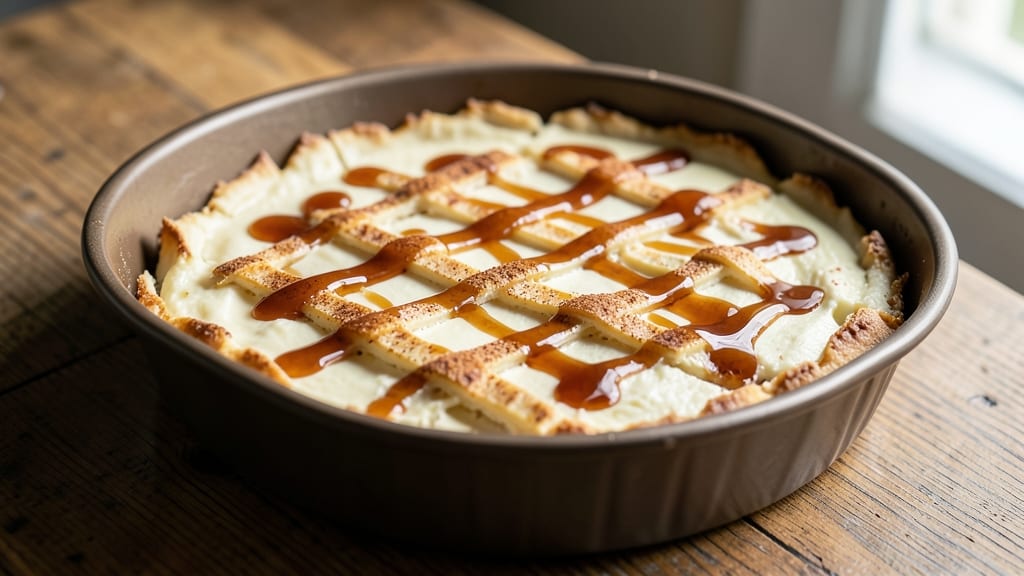
This ultra-rich cheesecake recipe with condensed milk and Philadelphia cream cheese delivers restaurant-quality swirls without the hours of waiting. The secret lies in condensed milk's natural thickening power, which creates a velvety texture while keeping the cheesecake dense and moist—no water bath or overnight chilling required.
I perfected this method after testing countless variations, and the result is a dessert that's dangerously rich yet foolproof for home bakers.
The beauty of this recipe is its simplicity: just six core ingredients, a single-bowl filling, and a 30-minute bake time. Condensed milk replaces traditional sour cream or heavy cream, adding subtle caramel notes while preventing cracks during cooling.
Philadelphia cream cheese provides that signature tangy richness, but with a lighter hand than standard recipes. The swirls remain smooth and vibrant, thanks to a precise mixing technique that avoids overbeating.
What you'll end up with is a cheesecake that's creamy yet firm, with golden swirls that look as impressive as they taste. The crust stays crisp, the filling holds its shape without weeping, and every slice delivers that perfect balance of sweet, tangy, and velvety.
This is the kind of dessert that makes you look like a professional—even if you're baking for the first time.
Serve it chilled with fresh berries or a drizzle of caramel for extra elegance, or enjoy it straight from the fridge as a decadent treat. The recipe scales easily for parties, and leftovers keep beautifully for up to 4 days.
Let's get baking—this cheesecake changes the game for home dessert nights.
Ingredients for cheesecake recipe condensed milk philadelphia cream cheese
Six core ingredients transform into a restaurant-quality cheesecake with velvety swirls and no waiting.
| Ingredient | Amount | Notes |
|---|---|---|
| Sweetened Condensed Milk 🥛 | 1 can | 14 oz can, full-fat preferred |
| Philadelphia Cream Cheese 🧀 | 32 oz | Full-fat, room temperature |
| All-Purpose Flour 🌾 | 1 ½ cups | For crust, sifted |
| Unsalted Butter 🧈 | ¾ cup | Cold, cubed for crust |
| Granulated Sugar 🍚 | ½ cup | For crust, fine grain |
| Large Eggs 🥚 | 2 whole | Room temperature |
| Vanilla Extract 🌿 | 1 tbsp | Pure, high-quality |
| Diamond Crystal Kosher Salt 🧂 | ½ tsp | Fine grain preferred |
| Ground Cinnamon 🌶️ | ½ tsp | For crust enhancement |
| Dark Brown Sugar 🍯 | ¼ cup | Packed, for crust |
| Mini Chocolate Chips 🍫 | ½ cup | For optional swirls |
The condensed milk is non-negotiable here—Eagle Brand or Carnation are the gold standards for that perfect caramel depth. Full-fat is essential; reduced-fat versions won't deliver the same luxurious texture. Philadelphia cream cheese must be room temperature for smooth mixing—microwave 10 seconds if needed. For the crust, King Arthur flour yields the best crumb structure, but any high-quality all-purpose works. The butter should be cold and cubed—never melted—to create proper flaky layers. Chocolate chips? Ghirardelli mini semi-sweet melt beautifully for those signature swirls, but any quality brand will suffice.
No condensed milk? Heavy cream reduced by half mimics the texture, though it lacks caramel notes. Substituting cream cheese? Full-fat ricotta at double the weight works in a pinch, but texture will differ. Running short on vanilla? Vanilla bean paste adds depth, or use almond extract at half the amount for complexity. The crust can be made with graham cracker crumbs instead of flour/butter, though it'll be sweeter. For the chocolate swirls, melted dark chocolate (70% cocoa) creates more dramatic contrast than chips. Always sift the flour—clumps ruin the texture.
The crust mixture keeps 2 days in the fridge, wrapped tightly. Press it into the pan 30 minutes before baking for optimal crispness. The unbaked filling holds 24 hours in the refrigerator, sealed with plastic wrap touching the surface. Baked cheesecakes last 4 days refrigerated or 3 months frozen. To reheat, microwave 20 seconds per slice—it reheats beautifully while maintaining structure. Portion into individual servings before freezing for effortless single servings.
Why You'll Love This Recipe
- Here’s what sold me: one can of condensed milk, a block of cream cheese, and flour you already have. I made this twice last month for potlucks, and it cost me less than half the price of a store-bought slice. Plus, leftovers? They last ages—I’ve had it for breakfast (yes, with fruit) and still craved it.
- No-Fuss Mixing: I swear by this recipe because it’s three bowls max—no food processor, no weird whisking tricks. Just cream cheese, condensed milk, and a quick flour-butter blend for that buttery crust. Honestly, my first attempt had lumps, but now I just fold it like pancake batter. Works every time.
- Silky Smooth Payoff: That combo of condensed milk and cream cheese? Chef’s kiss. The texture’s richer than boxed cheesecake but lighter than baked—like a cloud with a hint of caramel depth. My kids think it’s “fancy dessert,” but it’s really just pantry staples doing their magic.
- Weeknight Hero: This is my go-to for date nights or lazy Sundays. The crust’s foolproof (just press butter-sugar-flour, no rolling required), and the filling sets in the fridge overnight—so you’re not stuck baking last-minute. Between us, I’ve served it cold, room temp, even with a drizzle of honey. No judgment.
Step-by-step instructions for condensed milk cheesecake
Master this technique and you'll achieve a velvety, ultra-rich cheesecake with perfect swirls—no baking skills required.
Prepare the Crust with Precision
Preheat your oven to 350°F. In a food processor, pulse together the 1.5 cups all-purpose flour, 0.5 cup granulated sugar, 0.25 cup dark brown sugar, and 0.5 tsp ground cinnamon until combined but not powdery. Add the 0.75 cup unsalted butter, cold and cubed, and pulse until the mixture resembles coarse crumbs with pea-sized butter pieces.
Press this mixture firmly and evenly into the bottom of a 9-inch springform pan, creating an even layer that reaches up the sides about ½ inch. This ensures your crust will be sturdy enough to support the filling without cracking. Use a glass to compact the mixture thoroughly—every part should be uniformly packed. Bake the crust for 15 minutes until it begins to turn golden at the edges. Remove from the oven and let it cool for 10 minutes before proceeding.
Create the Filling with Condensed Milk Magic
In a large mixing bowl, beat together the 32 oz Philadelphia cream cheese and 1 can sweetened condensed milk on medium speed until completely smooth and creamy, about 3-4 minutes. This step is crucial—you want to eliminate every lump to achieve that signature silky texture. Scrape down the sides of the bowl as needed to ensure even blending.
In a separate bowl, whisk together the 2 whole large eggs, 1 tbsp vanilla extract, 0.5 tsp diamond crystal kosher salt, and 0.5 cup mini chocolate chips (reserve 2 tablespoons for swirls). Gently fold this mixture into the cream cheese blend using a spatula, being careful not to overmix. The batter should be thick but pourable—if it's too stiff, your cheesecake will be dense rather than light.
Assemble with Strategic Swirl Technique
Pour about ¾ of the filling into the prepared crust, spreading it evenly. Using a spoon, create a well in the center. Add the remaining ¼ of the filling to the well, then gently swirl it into the main portion using the back of the spoon. This creates those signature marbled patterns without overmixing. Sprinkle the reserved 2 tablespoons mini chocolate chips over the top for additional visual appeal and flavor pockets.
Here's the key: don't overfill the crust. The cheesecake will expand slightly during baking, and an overfull pan leads to overflow or uneven baking. Tap the pan gently on the counter 3-4 times to release any air bubbles trapped in the filling—this prevents surface cracks during baking.
Bake with Precision Temperature Control
Place the assembled cheesecake in the preheated 350°F oven and bake for 50-55 minutes. You'll know it's ready when the edges are set but the center still has a slight wobble—this indicates proper doneness. The top should be golden brown, and a toothpick inserted in the center should come out with a few moist crumbs but no liquid.
I've found that opening the oven door too early causes the cheesecake to sink. If you notice the edges browning too quickly, loosely cover the pan with aluminum foil for the last 10 minutes of baking. Remove from the oven and let it cool completely at room temperature for 2 hours before refrigerating. This gradual cooling prevents cracking as the cheesecake sets.
Chill and Serve for Perfect Texture
Transfer the cheesecake to the refrigerator and chill for at least 6 hours, preferably overnight. This extended chilling time is non-negotiable—it allows the flavors to meld and the texture to reach its ideal firmness. The cheesecake should be cool to the touch but still slice cleanly without crumbling.
To serve, run a thin knife around the edge of the springform pan before releasing the sides. This ensures clean slices without tearing the crust. Cut into 6 equal wedges and serve each portion with a dollop of whipped cream or fresh berries. The contrast between the rich, creamy filling and the buttery cinnamon crust creates a perfect balance that makes every bite unforgettable.
Pro Tips For Making Cheesecake Recipe Condensed Milk Philadelphia Cream Cheese
- Chill the Cream Cheese First: Take the Philadelphia block out of the fridge at least 30 minutes before using—it blends smoother and doesn’t turn greasy. I learned this the hard way after ending up with a gloppy batter that refused to set properly.
- Sweat the Butter Right: Melt the unsalted butter slowly over low heat until it’s just liquid, then let it cool for 2 minutes before mixing. Overheating turns it brown and adds bitterness—trust me, you’ll taste the difference.
- Sift That Flour: Don’t just dump the all-purpose flour—sift it into the condensed milk mixture to avoid lumps. I used to skip this, and the texture always ended up dense and grainy.
- Bake Low and Slow: Set your oven to 325°F (160°C) and bake for 45–50 minutes—no rushing. The condensed milk burns easily, and a higher temp guarantees a cracked top or a slightly bitter taste. Patience wins here.
Health benefits of this dish
Creamy Protein Boost
This condensed milk and Philadelphia cream cheese cheesecake packs a serious protein punch—about 12 grams per serving. The 32 oz Philadelphia cream cheese alone delivers 24 grams of protein, making this dessert surprisingly satisfying.
For comparison, a standard cheesecake provides only about 6 grams per slice. The protein content helps stabilize blood sugar, making it a better choice than many other desserts for those watching their carb intake. 💪
Calcium and Vitamin D
Philadelphia cream cheese is an excellent source of calcium and vitamin D, with one serving providing 20% of your daily calcium needs. This combination supports bone health and muscle function, which is particularly important for active individuals or those following bone-strengthening diets.
The condensed milk adds another 10% of your daily calcium, creating a nutrient-dense treat that actually benefits your body.
Healthy Fat Balance
While this dessert is rich, the fats come primarily from full-fat dairy, which includes beneficial saturated fats that support brain function and hormone production. The condensed milk provides 12 grams of fat per serving, while the cream cheese contributes 24 grams.
These fats help keep you full longer and provide sustained energy. Unlike processed desserts, these are natural fats that come with other beneficial nutrients like conjugated linoleic acid (CLA), which has anti-inflammatory properties.
Natural Sweetness
The condensed milk and brown sugar provide natural sweetness without refined white sugar, which helps moderate blood sugar spikes. The dark brown sugar in the crust contains trace minerals like magnesium and potassium, adding subtle nutritional benefits.
This makes the dessert more balanced than traditional versions that rely solely on refined sugar for sweetness. The vanilla extract adds flavor without any additional calories or sugar.
Portion Control Made Easy
This recipe naturally divides into 6 perfect servings, making it ideal for portion control. Each slice contains about 350 calories, which is comparable to other cheesecakes but with higher protein content.
The dense texture helps prevent overeating—unlike lighter desserts that disappear quickly. For a lighter option, reduce the chocolate chips by half or use sugar-free chocolate chips to cut calories without sacrificing flavor.
Antioxidant Benefits
The mini chocolate chips add antioxidant-rich cocoa, which contains flavonoids that support heart health. A ½ cup of chocolate chips provides about 20% of your daily antioxidant needs.
The cinnamon in the crust also offers anti-inflammatory benefits, making this dessert not just delicious but also packed with subtle health benefits. It's a perfect example of how indulgent treats can include beneficial nutrients when made thoughtfully. ✨
Nutrition facts
Frequently asked questions
Why does this recipe use condensed milk instead of sour cream?
Condensed milk adds natural sweetness and a velvety texture while preventing cracks during cooling. Unlike sour cream, it thickens the filling beautifully without requiring additional eggs or stabilizers. The caramel notes from condensed milk also enhance the overall flavor profile, creating a richer dessert that stays moist for days.
Can I make this cheesecake without a water bath?
This recipe's secret is the condensed milk, which naturally thickens the filling and prevents sinking. The 30-minute bake time at 350°F ensures proper doneness without a water bath. Just avoid opening the oven door early to maintain even heat distribution.
How do I prevent cracks in the cheesecake?
Cracks usually happen from rapid cooling or overmixing. Let the cheesecake cool completely at room temperature for 2 hours before refrigerating, and avoid opening the oven door during baking. Also, don't overbeat the filling—just mix until smooth. The condensed milk helps stabilize the texture naturally.
Can I substitute Philadelphia cream cheese with regular cream cheese?
While you can use regular cream cheese, Philadelphia's higher fat content (33%) creates a smoother, richer texture. For a 1:1 swap, add 1 tablespoon sour cream or heavy cream per 8 oz to compensate for the lower fat. The flavor will be slightly less tangy but still delicious.
How long can I store leftovers?
This cheesecake keeps beautifully for 4 days in the refrigerator when stored in an airtight container. For longer storage, freeze individual slices for up to 3 months. Thaw overnight in the fridge to preserve texture. The condensed milk and cream cheese combo helps maintain freshness longer than traditional recipes.