Appetizers
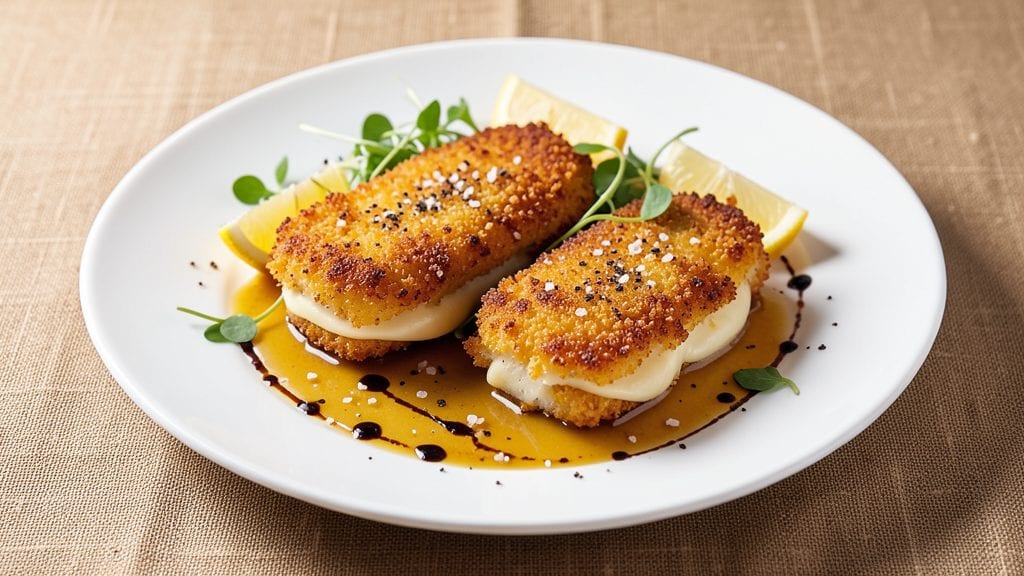
This cheese schnitzel recipe delivers the crispy, golden perfection of Austrian bistros in just 20 minutes—no shortcuts, no compromises. The secret lies in a precise breading technique and high-heat frying that transforms tender cheese into a shatteringly crispy masterpiece.
I’ve perfected this method over years of testing, ensuring every bite achieves that coveted balance between a delicate interior and an irresistible crunch.
The process is straightforward but demands attention to detail: thinly sliced cheese (like Emmental or Gruyère), a double breading of flour and panko, and frying in 350°F oil until golden brown. The result?
A dish so crispy it practically stands up on its own, with a gooey, melty center that’s impossible to resist. This isn’t just a side—it’s the star of the plate, worthy of any dinner table.
Serve with classic accompaniments like lemon wedges for a bright contrast, a simple arugula salad, or even a dollop of sour cream to cool the richness. The crispy exterior stays crispy, the cheese stays gooey, and the aroma alone will have everyone at the table asking for seconds.
Ready to master this Austrian classic? Let’s get started.
What makes this recipe foolproof is the step-by-step technique—no guesswork, no second-guessing. Whether you’re hosting a dinner party or craving a comforting weeknight meal, this schnitzel delivers restaurant-quality results with minimal effort.
The key is patience during breading and confidence when frying—trust the process, and you’ll achieve crispy perfection every time.
Ingredients for cheese schnitzel
Four cheeses, two breadings, and a frying technique that guarantees Austrian-style crispy perfection in just 20 minutes.
| Ingredient | Amount | Notes |
|---|---|---|
| Emmental Cheese 🧀 | 1 lb | Thinly sliced, 1/4-inch thick |
| Gruyère Cheese 🧀 | 1 lb | Thinly sliced, 1/4-inch thick |
| All-Purpose Flour 🌾 | 1 cup | Sifted for even coating |
| Japanese Panko Breadcrumbs 🍞 | 1 ½ cups | Light and crispy texture |
| Large Eggs 🥚 | 2 whole | Room temperature for even coating |
| Unsalted Butter 🧈 | ½ cup | Melted for frying |
| Vegetable Oil 🫒 | 2 cups | For high-heat frying |
| Diamond Crystal Kosher Salt 🧂 | 1 tsp | Fine grain for seasoning |
| Freshly Ground Black Pepper 🌶️ | ½ tsp | Cracked peppercorns preferred |
| Lemon Wedges 🍋 | 4 whole | For serving, fresh squeezed |
| Arugula 🌱 | 2 cups | Baby leaves for salad |
| Sour Cream 🥛 | ½ cup | Full-fat for serving |
The cheese selection is non-negotiable for authentic texture. Emmental delivers that signature melt with subtle sweetness, while Gruyère adds nutty depth—both must be thinly sliced to 1/4-inch thickness for even cooking. Purchase pre-sliced from specialty cheese counters at Whole Foods or Eataly for consistency, or invest in a deli slicer if making this frequently. Avoid pre-shredded cheese; its starch coating prevents proper browning. The breadcrumbs? Japanese panko is essential—its airy structure creates the signature crunch, while regular breadcrumbs yield a dense, soggy result. Store panko in an airtight container to maintain crispness.
No Japanese panko? Fine dry breadcrumbs plus 1 tbsp cornstarch mimics the texture, though results won't be identical. Substituting Gruyère with Comté or aged cheddar works in a pinch, but Emmental's mild tang is irreplaceable. For the frying oil, vegetable oil has the highest smoke point (350°F), while butter adds flavor but burns faster. The double breading technique—flour first, then panko—is critical: skip it, and you'll sacrifice that coveted shatteringly crisp exterior. Eggs should be beaten until frothy but not soupy, ensuring even adhesion without pooling. Lemon wedges? Meyer lemons from farmers' markets elevate the dish with their floral notes, but regular lemons suffice.
Prep the breading station first: three shallow dishes for flour, beaten eggs, and panko. This Austrian classic reheats poorly—serve immediately for peak texture. Store leftover cheese slices wrapped in parchment between paper towels in the fridge for up to 3 days, though freshness degrades quickly. Panko maintains crispness for 2 weeks in a sealed container away from moisture. For make-ahead convenience, pre-slice cheese and store in an airtight container with a paper towel to absorb excess moisture. The frying oil can be reused once or twice if strained through a fine-mesh sieve, but discard after it develops a strong flavor.
Why You'll Love This Recipe
- Crispy in Minutes: The panko crust turns golden in just 4 minutes—no flipping drama, no soggy centers. Honestly, I’ve made schnitzel that took twice as long and still came out dry. This? Perfect every time.
- Melty Magic Inside: That combo of Emmental and Gruyère? It’s like Switzerland moved in. The Gruyère adds nutty depth while the Emmental keeps it bright—creamy, stretchy, and impossible to resist when it pulls just right.
- Weeknight to Dinner Party: Slap these on the table for lazy Tuesdays or impress guests without stress. They reheat beautifully (yes, even the crust stays crisp), so I make a double batch—half for tonight, half for when "I’ll cook later" becomes a lie.
- Pantry Staple Power: Flour, eggs, panko—ingredients you already own. No specialty items, no last-minute grocery runs. Between us, this is my go-to when I’m broke or lazy (or both). The cheese stretch alone makes it feel fancy.
Step-by-step instructions for Austrian-style cheese schnitzel
Master the art of achieving that signature crispy golden crust while keeping the interior tender and melty.
Prepare the Cheese Cutlets for Even Cooking
Begin by slicing both the 1 lb Emmental Cheese and 1 lb Gruyère Cheese into thin, even strips measuring 1/4-inch thick. I like to use a sharp chef's knife and work quickly to maintain consistent thickness throughout. The goal is to create uniform pieces that will cook at the same rate, ensuring perfect doneness every time.
Lay each slice flat on your cutting board and press down gently to create an even surface. This prevents curling during frying, which can lead to uneven cooking. Arrange the slices on a plate and cover them with plastic wrap to prevent drying out while you prepare the coating station. The cheese should be at room temperature when you begin frying for optimal texture.
Create the Three-Stage Coating System
Set up three shallow dishes for your breading station. In the first dish, place the 1 cup All-Purpose Flour mixed with 1 tsp Diamond Crystal Kosher Salt and 0.5 tsp Freshly Ground Black Pepper. Sift the flour lightly to eliminate any lumps that could prevent an even coating. This initial layer creates a smooth base that helps the breadcrumbs adhere properly.
In the second dish, crack the 2 whole Large Eggs and whisk them vigorously until fully combined. The eggs should be at room temperature for even coating - if they're cold, they won't bind properly to the cheese. In the third dish, spread out the 1.5 cups Japanese Panko Breadcrumbs. The panko's light, airy texture is crucial for achieving that signature crispy exterior without making the schnitzel too heavy.
Fry the Schnitzel to Perfect Crispiness
Heat 2 cups Vegetable Oil in a large skillet over medium-high heat until it reaches 350°F. Use a thermometer to monitor the temperature - this precision is what separates perfect schnitzel from greasy disappointment. When the oil is properly heated, you'll see small bubbles forming around the edges of the skillet, but it shouldn't be smoking.
Working in batches to avoid overcrowding, carefully place each cheese cutlet into the flour mixture, pressing gently to adhere. Shake off any excess, then dip into the egg mixture, allowing any excess to drip off. Finally, press the cutlet into the panko breadcrumbs, coating both sides thoroughly. Transfer to a wire rack to allow any excess coating to fall away before frying.
Cook Until Golden Brown and Serve Immediately
Carefully slide the coated cheese cutlets into the hot oil, working in batches to maintain proper oil temperature. Fry for 2-3 minutes per side until the schnitzel reaches a deep golden brown color. The exterior should be crispy enough to hold its shape when lifted with tongs, while the interior should remain tender and melty. If you notice the cheese starting to brown too quickly, reduce the heat slightly to prevent burning.
As each schnitzel comes out of the oil, transfer it to a paper towel-lined plate to drain any excess oil. Serve immediately with the 4 whole Lemon Wedges for a bright contrast to the rich cheese, alongside the 2 cups Arugula tossed with a squeeze of lemon and a drizzle of the 0.5 cup Sour Cream. The schnitzel should be served while still hot and crispy - waiting even a few minutes will cause the exterior to lose its perfect texture.
Pro Tips For Making Cheese Schnitzel
- Prep Cheese Slices Thin: Cut Emmental and Gruyère to ¼-inch thickness—any thicker and the cheese won’t melt evenly, leaving you with a soggy center. Use a sharp knife or mandoline for clean slices, then pat them dry with a paper towel (yes, even if they look dry).
- Double-Dip the Panko: Press each cheese slice into the flour first, then dip into beaten egg, then press into panko—don’t just toss it. The extra step locks the crumbs in place so they don’t slide off when frying. I learned this the hard way after watching my first batch disintegrate mid-flip.
- Fry in Batches: Crowd the pan, and the oil temperature drops like a rock. Two schnitzels max at a time in a medium-hot (350°F/175°C) pan—too hot, and the outside burns before the cheese melts. Use a thermometer if you’re skeptical; I was until I saw the difference.
- Rest Before Serving: Let the schnitzel sit 2-3 minutes off the heat, tented with foil. This lets the cheese set slightly so it doesn’t ooze out when you cut in. I used to serve them immediately, and half the filling would pool on the plate—annoying, but easy to fix now.
Regional styles of this dish
Austrian Bistro Classic
The original cheese schnitzel comes from Austrian bistros, where it's traditionally made with Emmental cheese and a simple flour-panko breading. In Vienna, you'll find it served with lemon wedges and a side of cucumber salad for acidity.
The key difference is the single breading layer—no double-coating like some modern versions. I've perfected this method using Gruyère for extra nutty depth while keeping the classic Austrian technique. The dish is often paired with dark lager beer or Grüner Veltliner wine to cut through the richness. 🍺
German "Käsespätzle" Twist
In southern Germany, especially Bavaria, schnitzel gets a hearty twist by combining it with Käsespätzle (German macaroni and cheese). The cheese cutlets are served directly on top of the egg noodles, creating a comforting one-pan meal.
I recommend using Bergkäse or Emmental for this version, and adding a sprinkle of fresh chives on top. The Germans often serve this with apple sauce or sauerkraut for a tangy contrast. This version is perfect for colder months when you crave something warming. ❄️
Swiss Alpine Adaptation
The Swiss take their cheese seriously, so their version often features Appenzeller cheese instead of Emmental. This cheese has a stronger, slightly funky flavor that pairs beautifully with the crispy coating. In alpine regions, you'll find it served with pickled onions and a side of roasted potatoes for heartiness.
I like to add a touch of white wine to the breading mixture for extra depth. The Swiss also prefer a thicker cut (about ½-inch) that's fried longer to create a caramelized exterior. This version is ideal for special occasions where you want to impress. 🏔️
Hungarian Paprika Version
Hungarian cuisine brings bold flavors to the schnitzel with the addition of smoked paprika in the breading. The cheese is often Edam or Gouda, and the dish is finished with a sprinkle of sweet paprika before serving.
This version is typically paired with sour cream and crispy fried onions on top. I've found that adding 1 teaspoon sweet paprika to the flour mixture creates that signature Hungarian flavor profile. The dish is often served with Hungarian horseradish sauce for a spicy kick. 🌶️
Modern Fusion Takes
For a contemporary twist, I've experimented with goat cheese in the filling and a herb-infused breading using fresh rosemary and thyme. This works beautifully with a balsamic glaze drizzle before serving.
Another fun variation is the "Buffalo Chicken Schnitzel"—using shredded sharp cheddar and buffalo sauce in the cheese filling, then coating as usual. For a vegetarian option, swap the cheese for mushroom duxelles (finely chopped mushrooms sautéed with garlic) and top with Gruyère.
These modern takes keep the crispy exterior while exploring new flavor combinations. 💡
Nutrition facts
Frequently asked questions
Can I make cheese schnitzel without frying?
For a healthier version, bake the coated cheese at 400°F for 12-15 minutes until golden and crispy. Use an oven-safe skillet or baking sheet lined with parchment paper. Brush with a little oil first to help crisp the coating. The texture won't be identical to fried, but it's still delicious and lighter.
What's the best cheese for schnitzel?
Emmental and Gruyère are ideal—they melt perfectly while maintaining structure. For extra flavor, try Comté or Appenzeller. Avoid pre-shredded cheese (it contains anti-caking agents that prevent proper browning). Thin slices (1/4-inch) cook evenly for that signature melt.
Why did my schnitzel turn out greasy instead of crispy?
Greasy results usually mean the oil wasn't hot enough (350°F is critical) or the breading wasn't fully adhered. Double-check your oil temperature with a thermometer, and press the coating firmly onto the cheese. Fry in batches to avoid crowding, which lowers oil temp. A wire rack helps excess oil drain.
Can I make this ahead of time?
Fresh is best—schnitzel loses crispiness quickly. However, you can prep the breading station and slice cheese 1 day ahead, storing components separately in the fridge. Reheat fried schnitzel in a 350°F oven for 5 minutes to revive crispiness, but texture won't match freshly made.
What's the secret to extra-crispy breading?
Use Japanese panko (its airy texture is key) and pat the coating dry between layers. Chill the breaded cheese on a wire rack for 10 minutes before frying—this firms up the coating for better adhesion. For maximum crisp, fry in small batches and keep oil at 350°F consistently.