Appetizers
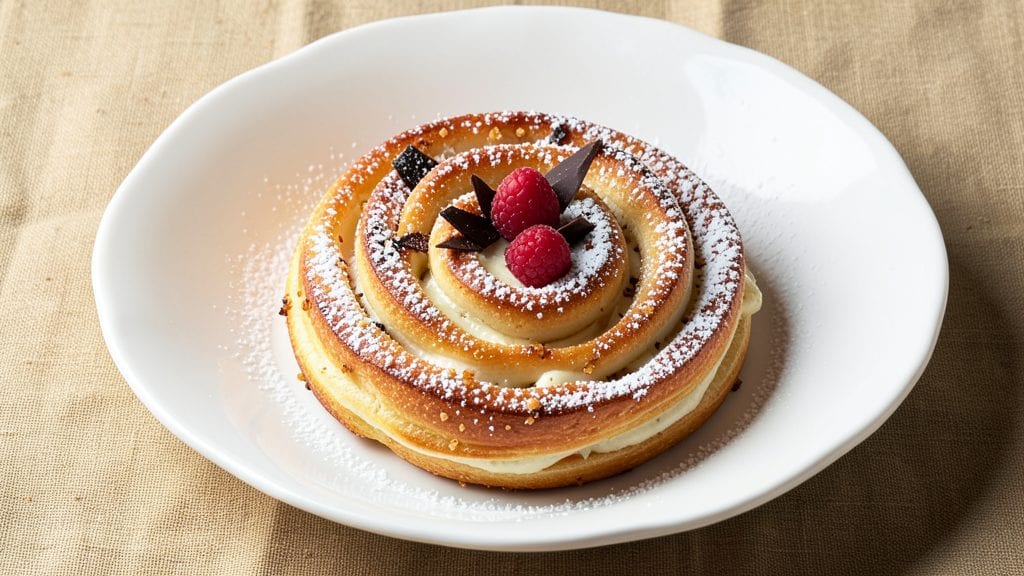
This cheese babka recipe transforms a classic sweet yeast bread into a buttery, cheesy masterpiece with golden swirls that crackle at every bite.
The secret lies in layering rich dough with a tangy cheese filling, then baking it to a perfect crispy crown—just like the babkas you’d find in Polish bakeries.
I’ve perfected this technique over years of baking, balancing sweetness with the sharp, creamy bite of cheese for a flavor profile that’s both nostalgic and unexpected.
The dough starts with a simple yeast mixture, but the magic happens when you fold in cold butter and cheese, creating those signature swirls that give babka its iconic look. Baking at 350°F for 30-35 minutes ensures a crispy exterior while keeping the inside tender and moist.
The cheese filling—made with farmer’s cheese or ricotta—adds a subtle tang that cuts through the sweetness, making each slice irresistibly rich.
What you’ll end up with is a babka that’s crispy on top, flaky in layers, and packed with that perfect balance of sweetness and savory cheese. The aroma alone will fill your kitchen with warmth, while the texture—crispy crown, tender crumb—makes it worth every bite.
This isn’t just dessert; it’s a showstopper that pairs beautifully with coffee or tea.
Whether you’re serving it at a brunch spread or saving slices for a midday treat, this babka delivers restaurant-quality results with a homemade touch. The key is patience—letting the dough rise properly and folding the swirls carefully—so every bite is as impressive as the first.
Ingredients for cheese babka
Twelve ingredients, one golden masterpiece: crispy crown, buttery swirls, and creamy cheese filling.
| Ingredient | Amount | Notes |
|---|---|---|
| All-Purpose Flour 🌾 | 5 cups | Sifted for light texture |
| Granulated Sugar 🍚 | 1 cup | White or light brown |
| Active Dry Yeast 🍞 | 2 ¼ tsps | Fresh yeast preferred |
| Warm Whole Milk 🥛 | 1 ¼ cups | 110°F for yeast activation |
| Unsalted Butter 🧈 | 1 ½ cups | Cold, cubed for dough |
| Large Eggs 🥚 | 3 whole | Room temperature |
| Farmer's Cheese 🧀 | 1 ½ cups | Or ricotta, drained |
| Granulated Sugar 🍚 | ½ cup | For cheese filling |
| Vanilla Extract 🌿 | 1 tbsp | Pure vanilla preferred |
| Salt 🧂 | 1 ½ tsps | Fine sea salt |
| Baking Powder 🍞 | 1 tsp | For extra lift |
| Heavy Cream 🥛 | ½ cup | For cheese filling |
| Raisins 🍇 | ½ cup | Optional, for sweetness |
| Egg Wash 🥚 | 1 whole | 1 egg beaten with 1 tbsp milk |
| Coarse Sugar 🍚 | ¼ cup | For topping (optional) |
The butter and cheese are non-negotiable here. European-style butter from Land O'Lakes or Plugrá gives the best flavor, but any good brand works. For the cheese, farmer's cheese is traditional—find it at Whole Foods or Polish markets—but ricotta works too. Drain it well to avoid a soggy babka. The flour should be sifted (no lumps!), and the yeast must be fresh—if it's old, it won't activate properly. I always double-check the yeast expiration date before starting.
No farmer's cheese? Ricotta or even cottage cheese (blended smooth) works in a pinch. Short on raisins? Chopped dried apricots or candied citrus peel add a nice twist. The dough needs to rise twice—don't skip the second rise, even if it's tempting. For the cheese filling, if it's too thick, stir in a splash of heavy cream. The key to those perfect swirls is rolling the dough tightly and folding it carefully—practice makes perfect, but even first-timers can get close with patience.
This babka keeps beautifully—wrapped tightly in plastic, it stays fresh for 3 days at room temperature or 1 week in the fridge. For longer storage, slice and freeze portions on a tray before bagging—up to 3 months. Reheat slices in the oven at 300°F for 5-10 minutes to restore that crispy magic. The aroma alone will wake up your whole house, so bake it when you're ready for a treat.
Why You'll Love This Recipe
- You’re using pantry staples: flour, sugar, yeast, milk, butter. No specialty ingredients, no markup. For the cost of a single café pastry, you get enough to feed four people—or save half for next week’s snack stash.
- No-Yeast Struggles Gone: The dough rises while you sleep—no fussing with proofing timers or guessing when it’s ready. Just toss in the yeast with warm milk, let it puff overnight, and wake up to a head start that tastes like a bakery’s secret.
- Sweet-Savory Magic: That buttery dough wrapped around a gooey cheese-sugar filling? It’s the kind of contrast that makes you close your eyes. The warm milk keeps it tender, while the butter makes every bite irresistible—like dessert and comfort food had a baby.
- Breakfast to Brunch Hero: Slice it fresh for a weekend brunch, pack leftovers for lunch, or even freeze slices for lazy mornings. It’s the one thing that works as a treat and a meal—no weird leftovers, just pure flexibility.
Step-by-step instructions for cheese babka recipe
This method delivers that signature crispy crown and buttery swirls—every time.
Prepare the Dough for Maximum Flavor
In a large mixing bowl, combine the 5 cups all-purpose flour, 1 cup granulated sugar, 2.25 teaspoons active dry yeast, and 1.5 teaspoons salt. Whisk everything together to distribute the yeast evenly through the flour. This pre-mixing step ensures the yeast activates quickly when wet ingredients are added.
In a separate bowl, warm the 1.25 cups warm whole milk to 110°F—it should feel comfortably warm to your wrist but not hot. Add the milk to the dry ingredients along with the 3 whole large eggs and 1.5 cups unsalted butter, cut into small cubes. Using a wooden spoon or dough whisk, mix vigorously for 3-4 minutes until a shaggy dough forms. The butter should begin to melt slightly, creating pockets of fat that will later create those signature flaky layers.
Transfer the dough to a lightly floured surface and knead gently for 5-7 minutes until smooth and elastic. You're not looking for a tight, windowpane-like dough here—just enough development to bring the ingredients together. Shape into a ball, place in a greased bowl, cover with a damp towel, and let rise in a warm place for 1-1.5 hours, or until doubled in size. The dough should feel light and springy when pressed gently.
Make the Cheese Filling and Prepare the Dough for Swirling
While the dough rises, prepare the filling by combining 1.5 cups farmer's cheese, 0.5 cup granulated sugar, 0.5 cup heavy cream, 1 tablespoon vanilla extract, and 0.5 cup raisins (if using) in a medium bowl. Mix until smooth and set aside. This filling should be thick but spreadable—if it's too stiff, add 1-2 teaspoons of warm milk to loosen it.
Once the dough has risen, punch it down gently to release air, then roll it out on a floured surface into a 12x16-inch rectangle. Spread the cheese filling evenly over the dough, leaving a 1-inch border around the edges. This border is crucial—it prevents the filling from leaking out during baking and ensures that crispy crown we're after.
Starting from the long side, tightly roll the dough into a log. Here's the trick: use a sharp knife to cut the log diagonally into two equal pieces. This creates two angled ends that will help the babka hold its shape during the final swirl. Keep the cut sides facing up and cover loosely with plastic wrap to prevent drying while you prepare the butter layer.
Create the Signature Swirls and First Rise
Take one of the diagonal-cut ends and place it at a 45-degree angle to the other piece, creating an "X" shape. Gently press the ends together to form a loose spiral, then roll the entire log into a single, tight spiral starting from the wide end. This technique creates those iconic swirls while keeping the filling contained. Place the babka seam-side down on a parchment-lined baking sheet.
Cover the babka loosely with plastic wrap and let it rise for another 45-60 minutes until it's noticeably puffy. The dough should spring back slowly when pressed gently with a fingertip. Preheat your oven to 350°F during this final rise—this ensures the babka goes straight into a hot oven when ready.
Bake to a Golden, Crispy Perfection
Once the babka has risen, brush the top generously with the egg wash (1 whole egg beaten with 1 tablespoon milk), then sprinkle evenly with the 0.25 cup coarse sugar for that signature crunchy crown. Here's where the magic happens: bake for 40-45 minutes until the top is deep golden brown and the internal temperature reaches 190°F. The edges should pull away slightly from the pan, and you should smell that unmistakable buttery, caramelized aroma.
For the crispy crown, increase the oven temperature to broil for the last 2-3 minutes of baking. Watch closely—this step happens quickly! The top should develop a deep golden color with caramelized spots. If it starts to brown too quickly, move the pan away from the heat source and continue broiling on the lower rack.
Remove from the oven and let the babka cool on a wire rack for 15-20 minutes before slicing. This resting period allows the layers to set and the filling to thicken slightly. Serve warm with a dusting of powdered sugar or a dollop of whipped cream for that perfect babka experience.
Pro Tips For Making Cheese Babka
- Chill the Dough: DESCRIPTION: After the first rise, pop that babka dough in the fridge for 1–2 hours before shaping. I used to skip this and ended up with a dense, fighty loaf—cold dough layers cleaner and rises more evenly when baked. (Yes, even if you're impatient like me.)
- Soften Butter Properly: DESCRIPTION: Use room-temperature butter for the filling, but not warm—it should press into the dough like a firm pat, not melt. I learned this the hard way when my filling oozed out mid-bake. Stick it in the fridge for 10 minutes if it’s too soft.
- Don’t Overmix the Yeast: DESCRIPTION: Once the yeast and milk sit for 5–10 minutes (until foamy), mix it into the flour just until combined—lumpy dough is fine. Overworking it kills the yeast’s lift, and your babka will taste flat. Trust the process; it’s not a cake batter.
- Brush with Milk: DESCRIPTION: After baking, brush the top with warm whole milk while it’s still hot—it’ll give you that glossy, restaurant-quality finish. I used water once and regretted it; milk’s fat makes all the difference. Do it fast before the babka cools.
Pro cooking tips for cheese babka
Dough Temperature Control
The secret to those perfect flaky layers starts with cold butter—cut it into ½-inch cubes and keep them chilled until the last minute. When mixing, the butter should melt just enough to create pockets of fat in the dough.
If your kitchen is warm, chill the dough for 15 minutes before shaping to prevent over-rising. I use a thermometer to check that my dough sits at 75-78°F before the second rise—this balance ensures a tender crumb without a gummy texture. 🌡️
Cheese Filling Consistency
Your cheese filling makes or breaks the babka, so get it right: farmer’s cheese should be thick but spreadable—almost like a thick pudding. If it’s too stiff, whisk in 1-2 teaspoons of warm milk until it reaches a pudding-like consistency.
For extra richness, I fold in 1 tablespoon of melted butter into the filling. Pro tip: Drain ricotta or cottage cheese overnight in a strainer lined with cheesecloth to remove excess moisture—this prevents a soggy babka.
The filling should coat the back of a spoon but still hold its shape. 🧀
Swirl Technique Mastery
The 45-degree angle cut is non-negotiable for those iconic swirls. After rolling the dough into a log, slice it diagonally into two equal pieces—this creates the perfect tension for the spiral. When forming the swirl, start from the wide end and roll tightly, keeping the seam side down.
If the dough resists, let it rest for 10 minutes before reshaping. I use a bench scraper to gently guide the dough into place without tearing. The goal is a tight, even spiral with no gaps—this ensures even baking and that signature crackly crust. ✨
Broiling for the Crown
Don’t skip the broil—it’s what gives babka that crispy, caramelized crown. Preheat your broiler to high and watch like a hawk: broil for 2-3 minutes until the top turns a deep golden brown with caramelized spots. If it browns too quickly, move the pan to the lower rack.
For extra drama, sprinkle coarse sugar right before broiling—it’ll melt into a glossy, crackly crust. I like to rotate the pan halfway through for even browning. The moment it’s done, transfer immediately to a wire rack to prevent sogginess. 🔥
Yeast Activation Check
If your yeast isn’t foamy after 5-10 minutes in warm milk, it’s dead—replace it immediately. I always test mine by dropping a pinch into warm milk with a pinch of sugar; if it bubbles within 3-5 minutes, it’s good to go.
For extra insurance, use instant yeast (like Bragg’s), which activates faster and doesn’t need proofing. If your dough rises too quickly (doubling in 30 minutes), your kitchen is too warm—chill it for 30 minutes before shaping. Patience here prevents a dense, gummy babka. 💡
Resting for Clean Slices
Never slice babka straight out of the oven—rest it for at least 15 minutes (up to 1 hour for cleaner cuts). The layers need time to set, or they’ll crumble. I use a serrated knife and cut at a 45-degree angle for the most dramatic slices.
For even better results, let it cool completely before slicing—this gives the filling time to firm up and the crust to crisp further. Store leftover slices in an airtight container at room temperature for up to 3 days or freeze for 1 month.
Reheat slices in a 350°F oven for 5 minutes to restore that bakery-fresh texture. 💫
Nutrition facts
Frequently asked questions
Can I substitute ricotta for farmer's cheese in this recipe?
Yes, ricotta works perfectly! Just drain it overnight in a strainer lined with cheesecloth to remove excess moisture—this prevents a soggy babka. For extra richness, fold in 1 tablespoon of melted butter into the ricotta mixture before using. The texture should be thick but spreadable, like pudding.
How do I fix a babka that didn't rise properly?
If your babka didn't rise enough, it's likely due to inactive yeast or a warm kitchen. First, check your yeast—it should foam within 5-10 minutes in warm milk. If not, replace it. For a second rise, place the dough in a cooler spot (70°F) and cover it with a damp towel. Give it 1-2 extra hours to rise slowly. If the dough is already shaped, let it rest 30 minutes before baking at 325°F instead of 350°F for 10-15 minutes longer.
Can I make cheese babka without raisins?
Skip the raisins or swap them for chopped dried apricots, candied citrus peel, or chocolate chips for a different flavor twist. The key is maintaining the filling's consistency—adjust the sugar slightly if using sweeter add-ins. For a savory option, try crumbled feta or goat cheese in the filling.
How long does cheese babka stay fresh?
Wrap tightly in plastic wrap or store in an airtight container to keep it fresh for 3 days at room temperature. For longer storage, slice and freeze portions on a tray before bagging—up to 3 months. Reheat slices in a 350°F oven for 5-10 minutes to restore crispiness. The aroma alone will wake up your whole kitchen!
Why did my babka turn out dense instead of flaky?
A dense babka usually means overworked dough or butter that melted too quickly. Use cold butter cubes and avoid kneading more than 5-7 minutes. If your kitchen is warm, chill the dough for 15 minutes before shaping. Also, ensure your yeast is active—it should foam in 5-10 minutes in warm milk. For extra flakiness, fold in an additional ¼ cup cold butter during the final rise.