
Appetizers
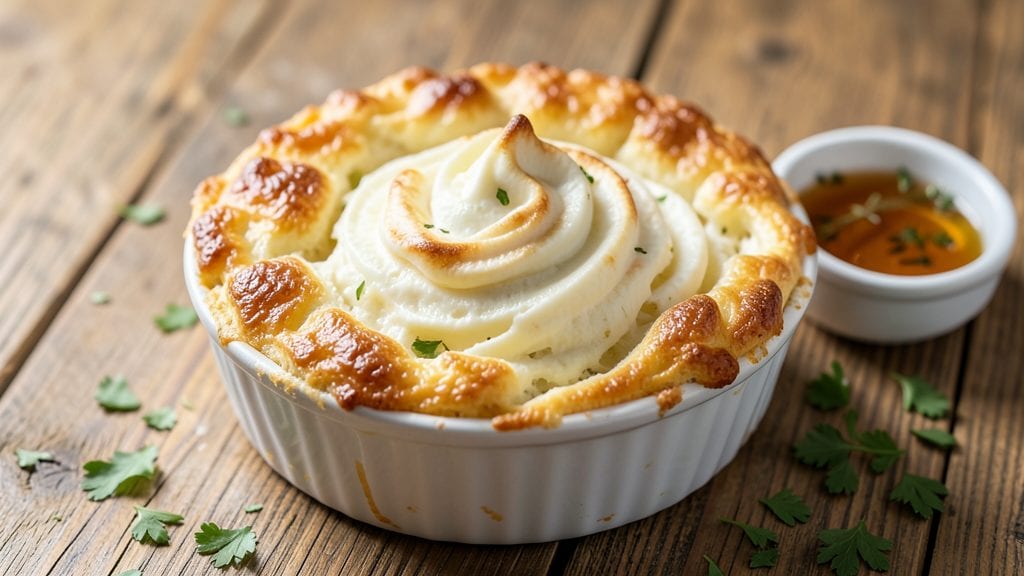
A basic cheese souffle recipe transforms simple ingredients into a restaurant-worthy dessert that rises to cloud-like perfection with the right technique. The secret lies in properly whipped egg whites and gentle folding—two steps that determine whether your souffle reaches its full potential or collapses into a sad, flat mess.
After years of testing, I’ve refined this method to deliver a light-as-air center with a golden, crisp exterior every single time.
This recipe relies on just five key components: egg yolks, cheese, butter, flour, and egg whites, all combined with precision to create a batter that’s both stable and airy.
The magic happens when you whip the egg whites to stiff peaks and fold them into the yolk mixture—too much folding, and the air escapes; too little, and the structure weakens.
Baking at 375°F for 15–20 minutes ensures the souffle expands fully before setting, while resting it briefly after baking locks in that signature rise.
What you’ll end up with is a cheese souffle that’s impossibly light, with a tender, custardy interior and a delicate golden crust. The cheese adds richness without overpowering the airy texture, making each bite feel like a cloud.
Serve it immediately for the best results—no waiting, no disappointment. This is the kind of dessert that turns a simple dinner into something extraordinary.
The key to success? Patience and precision. Avoid opening the oven door early, and never tap the souffle to test doneness—it’s still rising inside. Once out of the oven, let it rest for a full minute before serving, and always use a buttered ramekin for that perfect release.
With these steps, you’ll achieve the foolproof rise that makes this classic dessert worth every effort.
Ingredients for basic cheese souffle
Five ingredients transform into a restaurant-worthy cheese souffle with perfect rise every time.
| Ingredient | Amount | Notes |
|---|---|---|
| Large Eggs 🥚 | 8 whole | Room temperature for best whipping |
| Gruyère Cheese 🧀 | 1 cup | Freshly grated, aged 6 months minimum |
| Unsalted Butter 🧈 | ½ cup | Cold, cubed for even melting |
| All-Purpose Flour 🌾 | ¼ cup | Sifted for smooth batter consistency |
| Salt 🧂 | ¼ tsp | Fine sea salt for delicate flavor |
| White Wine 🍷 | ¼ cup | Dry, chilled for acid balance |
| Vanilla Extract 🌸 | ½ tsp | Pure alcohol-free preferred |
| Ramekins 🍽️ | 4 whole | 4-oz capacity, buttered well |
The cheese is non-negotiable—Gruyère delivers that signature nutty depth while melting smoothly. Whole Foods or specialty cheese shops carry the best aged varieties, but Kroger's pre-shredded section works in a pinch if labeled 'aged'. Avoid pre-shredded with anti-caking agents. For the eggs, room temperature is critical—cold whites won't whip properly. Separate yolks and whites immediately after cracking to prevent any yolk contamination, which kills volume. The butter should be cold and cubed—melted butter creates a dense batter.
No Gruyère? Comté or Emmental work well, but expect slightly different textures. Substitute wine with chicken broth plus lemon juice for a dairy-free version. The flour is purely for thickening—cornstarch at half the amount works if gluten-free is needed. For vanilla, alcohol-free extracts prevent any potential burning. The ramekins must be buttered and dusted with flour—greased pans cause sticking. If you don't have wine, apple cider vinegar thinned with water adds the needed acidity without altering flavor.
Prep the ramekins first—they need to sit while you whip egg whites. Butter generously and dust with flour so the souffle releases cleanly. Store any unused cheese wrapped in parchment in the fridge for up to 2 weeks. Leftover egg whites can be refrigerated in an airtight container for 2 days, but use them for omelets or meringues. The batter keeps for 1 hour at room temperature before folding—don't rush this step. For make-ahead prep, fold the whites into the yolk mixture and refrigerate up to 4 hours before baking.
Why You'll Love This Recipe
- Foolproof Technique: I’ve made soufflés collapse before—this one doesn’t. The Gruyère’s melt-in-your-mouth texture and the egg yolks’ gentle heat mean even if you’re nervous about timing, the oven’s job is simple: bake until golden. No stress, just results.
- Golden Crust, Creamy Heart: That crispy top with the silky center? It’s all in the butter and flour roux—just a few minutes of stirring over low heat, and suddenly you’ve got restaurant-worthy texture without the fuss. Honestly, the first bite makes me want to make it twice in one day.
- Weeknight Impresser: Bring it to a dinner party or serve it with a simple salad for a Tuesday night win. The Gruyère’s nutty depth pairs with anything, and it reheats beautifully—so you can make it ahead and still look like a pro. (Yes, even on a Tuesday night.)
- Pantry Staples Only: Five ingredients, zero specialty shopping. Eggs, cheese, butter, flour, salt—that’s it. No weird substitutions, no last-minute grocery runs. If you’ve got a fridge and pantry, you’ve got everything you need for this crowd-pleaser.
Instructions for basic cheese soufflé: light-as-air rise every time
Mastering this classic requires precision in technique and timing—follow these steps carefully.
Prepare the Béchamel Base
Melt the 0.5 cup unsalted butter in a medium saucepan over medium heat until it foams but doesn't brown. Reduce heat to medium-low and whisk in the 0.25 cup all-purpose flour continuously for 2 minutes until smooth and thickened. This creates a roux that forms the foundation of your soufflé.
Gradually whisk in the 0.25 cup chilled white wine, a splash at a time, until fully incorporated. The mixture should be velvety and have the consistency of heavy cream. Remove from heat and stir in the 1 cup freshly grated Gruyère cheese and 0.5 tsp vanilla extract until completely melted and smooth. The cheese should be fully incorporated with no visible lumps.
Separate and Whip the Egg Whites
While the béchamel cools slightly, separate the 8 large eggs into yolks and whites. Place the yolks in a medium bowl and gently whisk in the 0.25 tsp salt until just combined. The yolks should remain runny—overmixing will create a flat soufflé.
In a separate, spotlessly clean bowl (any grease will prevent proper whipping), beat the egg whites on low speed until foamy. Gradually increase to high speed and whip for 3-4 minutes until soft peaks form. You'll see the whites thicken and hold their shape when the beaters are lifted. This step is critical—under-whipped whites won't rise properly.
Combine the Béchamel with Egg Yolks
With the mixer on low speed, slowly pour the egg yolk mixture into the whipped egg whites. Use a spatula to gently fold, creating a marbled effect. This technique incorporates air while maintaining volume. Once fully combined, add the cooled béchamel in 3 additions, folding gently after each addition to maintain air pockets.
The final batter should be thick but still pourable, with a smooth, glossy texture. If it's too thin, your soufflé won't rise properly. If it's too thick, it may collapse. The ideal consistency resembles heavy cream with visible streaks of egg white.
Fill Ramekins and Bake Immediately
Preheat your oven to 375°F with a rack positioned in the center. Divide the batter evenly among the 4 buttered ramekins, filling each about ¾ full. Tap each ramekin gently on the counter to release any air bubbles.
Bake for 15-18 minutes until the soufflés have risen dramatically and the tops are golden brown. The edges should pull away slightly from the ramekin sides, and a toothpick inserted should come out clean. Open the oven door just a crack during the last minute to prevent sudden collapse from trapped heat.
Serve Immediately for Best Results
Remove the soufflés from the oven and serve them immediately while still hot. The dramatic rise happens in the oven, but they begin deflating as soon as they cool. For maximum lightness, serve directly from the ramekins with a sprinkle of additional Gruyère cheese on top.
If you must hold them briefly, place ramekins in a 200°F oven while you prepare accompaniments. The key to success lies in timing—never let them sit at room temperature for more than 5 minutes after baking. This delicate dessert demands immediate service for the perfect texture.
Pro Tips For Making Basic Cheese Souffle
- Preheat to 375°F: DESCRIPTION: No ifs, ands, or "just a little hotter" excuses—your oven needs to hit 375°F exactly and stabilize for at least 15 minutes before baking. I used to rush this, and my soufflés either collapsed or baked unevenly. That crispy crust and light interior? They start with a properly preheated oven.
- Grate Cheese Like Your Life Depends on It: DESCRIPTION: Skip the food processor—Gruyère melts better when freshly grated on a microplane or box grater. Big cheese chunks turn into gummy pockets, and pre-shredded cheese (with anti-caking agents) behaves like glue. Do this step right, or your souffle will taste like a science experiment gone wrong.
- Whisk Eggs Until Ribbon-Thin: DESCRIPTION: Your arms will hate you, but whisk those egg yolks and whites separately until they hold a slow, graceful ribbon when you lift the whisk. I learned this the hard way—under-whisked eggs mean a dense, sad souffle. If you’re struggling, use a stand mixer on medium-high for 3-4 minutes.
- Butter the Ramekins Then Dust with Flour: DESCRIPTION: Melt 1 tablespoon of butter in each ramekin, swirl to coat, then dust with a thin layer of flour—tap out the excess. This isn’t just to prevent sticking; it’s the non-negotiable base for that golden crust. Skip the flour, and you’ll spend 10 minutes scraping a stuck souffle off the sides.
Flavor customization for these flavors
Herb-Infused Variations
Swap the vanilla for 1 tsp fresh tarragon or thyme (finely chopped) to add an elegant herbal note. I love adding 1 tbsp chopped chives or parsley to the batter for a bright finish.
For a savory twist, reduce the cheese to ½ cup and fold in 2 tbsp finely chopped shallots and 1 tsp smoked paprika—this works surprisingly well as a savory appetizer. 🌿
Sweet Cheese Twists
Replace Gruyère with cream cheese for a richer, sweeter profile. Mix ½ cup cream cheese with the ½ cup Gruyère to balance the flavors. For a dessert version, fold in 2 tbsp powdered sugar and ½ tsp cinnamon after combining the batter—this creates a caramelized top when baked.
Serve with warm berry compote for contrast. 🍯
Spicy Kick Options
Add ½ tsp cayenne pepper or 1 tsp hot honey to the béchamel base for subtle heat. For a smoky depth, fold in 1 tsp chipotle powder with the cheese.
I also like adding 1 tbsp diced jalapeños (seeds removed) to the batter for pockets of spicy surprise. Balance with extra cheese to soften the bite. 🌶️
Global Flavor Adaptations
For a French-Italian fusion, fold in 1 tbsp sun-dried tomato paste with the cheese. A Mexican-inspired version swaps wine for ½ cup tomato sauce and adds ½ tsp cumin—serve with salsa verde.
For a Japanese twist, replace wine with 2 tbsp mirin and add 1 tsp matcha powder to the batter for earthy sweetness. 🗺️
Texture Play Experiments
Add ¼ cup toasted breadcrumbs to the batter for a crispy crust—this works well with the savory version. For extra decadence, fold in 2 tbsp crumbled bacon or ½ cup cooked diced ham into the base.
I’ve also tried adding 1 tbsp poppy seeds for a nutty crunch that pairs beautifully with the cheese. 💫
Seasonal Ingredient Swaps
In spring, replace wine with ½ cup apple cider and add 1 tsp lemon zest for brightness. For autumn, use ½ cup pumpkin puree (reduce cheese to ½ cup) and fold in ½ tsp pumpkin pie spice.
In winter, add 1 tbsp cranberry sauce to the batter for tart-sweet contrast. Summer calls for ½ cup mango puree and 1 tsp lime zest—trust me, it’s refreshing. 🍂
Nutrition facts
Frequently asked questions
Why does my cheese souffle collapse?
Most collapses happen from either overmixing the egg whites or opening the oven door too early. Whip whites only until soft peaks form, and avoid folding too vigorously. Also, never tap the ramekin to test doneness—this releases trapped air and causes deflation. The key is patience: let it bake fully at 375°F for 15-18 minutes before checking.
Can I make this souffle ahead of time?
You can prep the batter up to 4 hours ahead and refrigerate it, but baking must happen fresh. For a make-ahead dessert, bake the soufflés, then reheat ramekins in a 200°F oven for 5-10 minutes before serving. Never refrigerate baked soufflés—they won't recover their light texture.
What's the best cheese substitute if I don't have Gruyère?
Comté or Emmental work best for a similar melt and flavor. For a sharper taste, try Parmesan (reduce to ½ cup), or use cream cheese for a sweeter profile. Just ensure your cheese is freshly grated—pre-shredded varieties contain anti-caking agents that can make your souffle dense.
How do I know when the egg whites are properly whipped?
When whipped to soft peaks, the whites should hold their shape when you lift the beaters, but the tips should still bend slightly. Over-whipped whites (stiff peaks) will make your souffle dense. Test by tilting the bowl—if the whites form a peak that holds for a few seconds, you're ready. If they collapse immediately, keep whipping for 1-2 more minutes.
Can I use this recipe for a savory souffle?
Reduce the cheese to ½ cup and fold in 2 tbsp shallots or 1 tsp smoked paprika for a savory twist. Swap wine for chicken broth and add herbs like thyme or tarragon. Bake at 375°F for 12-15 minutes—savory versions set faster. Serve with a drizzle of olive oil or warm marinara for extra flavor.