
Appetizers
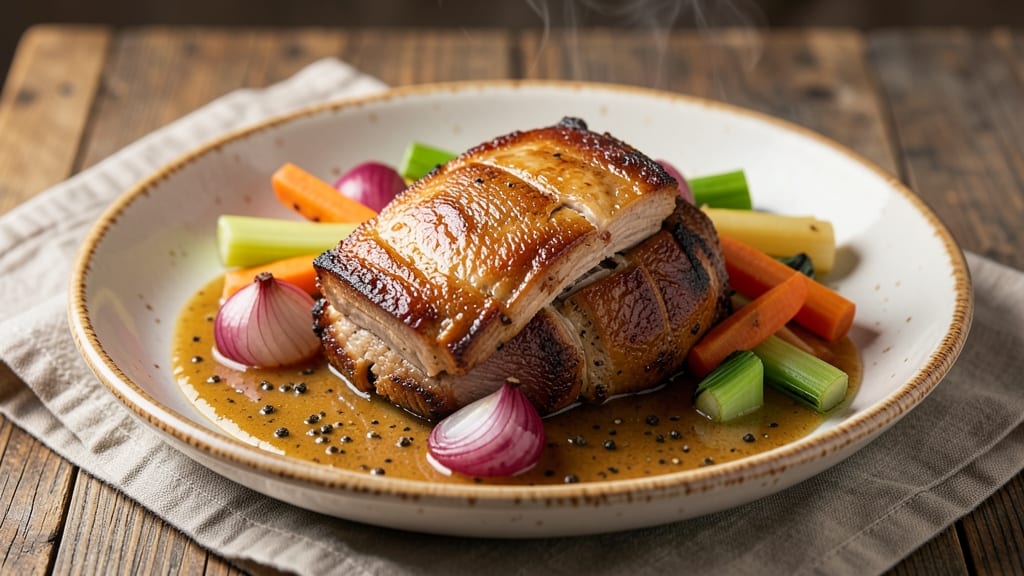
This Amish head cheese recipe transforms humble pork head into a rich, savory loaf with a crispy crust and tender interior—perfect for holiday gatherings or charcuterie boards. The traditional method relies on slow simmering to extract gelatin from the pork, creating a jiggly, flavorful center that sets beautifully when chilled.
I’ve adapted the classic technique to modern kitchens by using a pressure cooker for efficiency without sacrificing texture.
The result is a herb-infused pork loaf with a golden, crumbly top that holds slices perfectly. Unlike store-bought versions, this recipe delivers deep, smoky flavors from slow cooking and a balance of spices—black pepper, mustard seeds, and bay leaves—that define Amish country cooking.
The process is straightforward, but the reward is a dish that tastes like a homestyle tradition.
What makes this recipe stand out is its versatility—serve it with mustard and crackers for an appetizer, slice it thin for sandwiches, or pair it with pickles and cheese for a hearty spread.
The gelatin-rich filling ensures each slice stays firm, while the crust adds satisfying texture. This isn’t just a side dish; it’s a centerpiece that brings comfort and nostalgia to the table.
Ready in about 4 hours (including chilling time), this head cheese requires minimal active work but maximum flavor payoff. The key steps—simmering, straining, and setting—are where the magic happens.
Whether you’re hosting a holiday meal or craving a taste of Amish country, this recipe delivers restaurant-quality results with a homemade touch.
Ingredients for amish head cheese
Transform humble pork into a rich, gelatinous loaf with these traditional yet refined ingredients.
| Ingredient | Amount | Notes |
|---|---|---|
| Pork Head 🐖 | 1 whole | Fresh, cleaned, skin removed |
| Yellow Onions 🧅 | 2 whole | Medium-sized, peeled |
| Carrots 🥕 | 4 whole | Medium-sized, peeled |
| Celery Stalks 🌿 | 4 whole | Fresh, trimmed |
| Mustard Seeds 🌶️ | 1 tbsp | Whole, toasted lightly |
| Black Peppercorns 🌶️ | 1 tbsp | Freshly cracked |
| Bay Leaves 🌿 | 2 whole | Fresh, dried acceptable |
| Salt 🧂 | 2 tsp | Diamond Crystal preferred |
| All-Purpose Flour 🌾 | ½ cup | For breading crust |
| Breadcrumbs 🍞 | ½ cup | Panko preferred |
| Unsalted Butter 🧈 | ¼ cup | Melted for crust |
| Fresh Parsley 🌿 | ¼ cup | Chopped, for garnish |
| Water 💧 | 6 cups | For simmering broth |
The pork head is the foundation—look for fresh cuts at specialty butchers or high-quality grocery stores like Whole Foods or Costco. A clean, skinless head ensures a smoother texture. For the aromatics, yellow onions and carrots should be medium-sized to avoid bitterness. The celery adds depth, so choose fresh stalks with vibrant green tops. Mustard seeds and black peppercorns should be toasted lightly in a dry pan before use to enhance their flavors—Penzeys Spices offers high-quality whole seeds for this purpose.
No fresh bay leaves? Dried bay leaves at half the quantity work equally well. Substitute panko breadcrumbs with regular breadcrumbs if needed, though panko yields a lighter crust. For the butter crust, European-style butter like Plugrá adds richness. The water should be filtered or spring water for optimal simmering. If you lack a pork head, pork shoulder or neck bones can be used, though texture will differ slightly. Always strain the broth thoroughly to achieve a smooth, jiggly filling.
Store the assembled head cheese in an airtight container in the refrigerator for up to 5 days. For longer storage, wrap tightly in plastic wrap and freeze for up to 3 months. Allow it to come to room temperature before slicing for the best texture. The crust can be reheated briefly in the oven to restore crispiness. This dish reheats beautifully—simmer slices in broth or water for 5-10 minutes to restore moisture.
Why You'll Love This Recipe
- One-Pot Magic: I swear by this recipe—just toss the pork head, onions, carrots, and celery into a pot with broth, let it simmer low and slow, and boom. No extra pans, no fuss. The mustard seeds add a tiny kick that makes it feel special without extra work.
- Rich, Earthy Depth: That pork head? It’s like a flavor bomb—tender, savory, and packed with collagen that turns everything silky. The onions and carrots caramelize just enough to give it a sweet, jammy edge, while the celery keeps it bright. Honestly, it’s the kind of dish that makes you want to take a second helping.
- Potluck Star: Between us, this is my go-to for church dinners or family gatherings. It’s hearty enough to feed a crowd but simple enough that I’m not stressing over last-minute prep. Plus, it reheats like a dream—so I can make a big batch and not worry about leftovers going to waste.
- Budget-Friendly Feast: Pork head is one of those underrated gems—cheaper than steak, but way more satisfying. I stretch it across three meals: a big pot on Sunday, sandwiches on Tuesday, and even a quick hash on Thursday. It’s my secret for stretching groceries without sacrificing flavor.
Step-by-step instructions for Amish head cheese
Transforming a humble pork head into this rustic loaf requires patience and precision.
Prepare and Simmer the Pork Head
Begin by thoroughly cleaning the pork head under cold running water, removing any remaining skin or excess fat. Place the cleaned pork head in a large stockpot and add the 2 whole yellow onions, 4 whole carrots, 4 whole celery stalks, 1 tablespoon mustard seeds, 1 tablespoon black peppercorns, and 2 whole bay leaves. Pour in 6 cups water until the pork head is completely submerged.
Bring to a boil over high heat, then immediately reduce to a gentle simmer. Skim off any foam that rises to the surface during the first 15 minutes. Cover and simmer for 3 hours, maintaining a steady simmer rather than a rolling boil. The pork should become fork-tender and easily separate from the bone. If the liquid level drops below halfway up the pork head, add boiling water as needed to keep it covered.
Shred and Season the Meat
Once the pork is fully cooked, remove it from the broth and let it cool slightly. Using two forks or meat claws, carefully shred the meat into fine, even strands, discarding any bones or cartilage. Return the shredded pork to the stockpot with the cooking liquid and stir in 2 teaspoons salt. Let the mixture cool to room temperature, then refrigerate uncovered for 4 hours or overnight to allow excess fat to solidify on the surface.
After chilling, skim off the solidified fat from the top. The remaining broth should have a rich, gelatinous consistency. Transfer the pork mixture to a large bowl and discard any remaining broth or solids. The pork should now have a smooth, spreadable texture with a natural gelatinous quality.
Create the Crust and Assemble
Preheat your oven to 350°F. In a small bowl, combine 0.5 cup all-purpose flour and 0.5 cup breadcrumbs. Melt 0.25 cup unsalted butter in a small saucepan over low heat, then stir in the flour-breadcrumb mixture until fully incorporated. The mixture should form a thick, crumbly paste. Spread this mixture evenly over the top of the pork mixture in your serving dish, pressing gently to adhere.
Bake for 20-25 minutes until the crust is golden brown and crispy. The heat will help set the gelatinous pork mixture while creating a delightful textural contrast with the crunchy crust. Remove from the oven and let rest for 10 minutes before serving to allow the flavors to meld.
Garnish and Serve
Before serving, chop 0.25 cup fresh parsley finely. Sprinkle the parsley evenly over the top of the head cheese just before serving. This herb garnish adds a fresh contrast to the rich, savory pork. The head cheese can be served warm or at room temperature, sliced into thick portions for a hearty appetizer or main course.
This traditional preparation yields a loaf that's perfect for holiday gatherings or as a centerpiece for family meals. The combination of tender pork, aromatic vegetables, and crispy crust creates a dish that's both comforting and impressive. Store any leftovers in the refrigerator for up to 5 days, or freeze for longer storage.
Pro Tips For Making Amish Head Cheese
- Parboil the Head: Drop the whole pork head into a pot of boiling water for 10 minutes before braising—this softens the connective tissue just enough to make slicing later a breeze. I learned this the hard way after struggling with a rock-hard jawbone on my first attempt.
- Dice Onions Like Dice: Cut the yellow onions into ¼-inch cubes, not slices—this ensures even cooking and prevents soggy spots in the finished head cheese. My grandmother swore by this, and she was right: uniform pieces distribute flavor without turning to mush.
- Don’t Rush the Simmer: Keep the head cheese at a gentle simmer (180°F) for at least 4 hours—lower heat prevents the pork from drying out or the broth from reducing too fast. After burning three batches, I finally figured out that slow wins this race.
- Toast the Mustard Seeds: Dry-toast the mustard seeds in a separate pan for 30 seconds before adding them to the pot—they’ll mellow out their bite and deepen the flavor. Sounds weird, but it works: the seeds add warmth without overpowering the pork.
Wine and beer pairings for this amish head cheese
Amish-Inspired Wine
Amish head cheese pairs beautifully with dry Riesling from Germany or Austria—its crisp acidity cuts through the rich pork fat while complementing the mustard and black pepper notes.
I reach for Dr. Loosen Blue Slate Riesling from the Mosel region, which offers a mineral finish that mirrors the dish’s savory depth. Serve slightly chilled (50-55°F) to enhance the contrast between the wine’s brightness and the head cheese’s warmth. 🍷
Malty Beer Pairings
A German Dunkel or American brown ale balances the head cheese’s richness with caramel and toasted malt flavors. My go-to is Weihenstephaner Dunkel, Germany’s oldest brewery’s dark lager—its subtle roasted notes echo the crust’s crispiness.
For a hoppier option, try New Belgium Fat Tire Amber Ale, which adds a touch of citrus to cut through the pork’s richness.
Cider for Rustic Vibes
For a non-alcoholic or lighter option, dry hard cider like Strongbow Original or Angry Orchard works surprisingly well. The slight tartness and effervescence cleanse the palate between bites of the gelatinous pork.
I also enjoy Woodchuck Hard Cider’s Dry Apple variety—its crisp finish mirrors the head cheese’s herbaceous notes. Serve at 45-50°F for the best experience. 🍏
Avoid Heavy Reds
Skip bold reds like Cabernet Sauvignon or Syrah—their tannins and oak will overpower the delicate gelatin texture and herbaceous crust. Even medium-bodied reds like Pinot Noir can clash unless paired with a reduced-sauce preparation (which this recipe lacks).
Instead, lean toward lighter wines or beers that highlight the dish’s natural flavors without competing.
Regional Adaptations
In Pennsylvania Dutch country, where Amish head cheese originated, local apple brandy (like Schmitt’s Hard Cider) is often served as a digestif. A small sip after the meal enhances the dish’s herbal and peppery notes.
For a modern twist, pair with a sparkling wine like Prosecco—its bubbles and acidity refresh the palate between rich bites. 🥂
Nutrition facts
Frequently asked questions
What makes Amish head cheese different from regular meatloaf?
Amish head cheese relies on gelatin from slow-cooked pork head meat, creating a tender, jiggly texture when chilled—not dense like meatloaf. The crust is also key: this version has a crispy, crumbly topping made with butter and breadcrumbs, while meatloaf typically has a smooth glaze or crustless finish.
Can I substitute pork head with other cuts?
Yes! For gelatin-rich texture, use pork shoulder or neck bones (simmered 4+ hours). For a non-gelatin option, try ground pork mixed with 1/4 cup unflavored gelatin powder (dissolved in warm broth). The flavor will differ slightly, but the technique remains similar.
Why does my head cheese turn out too soft?
Overcooking the pork breaks down collagen, reducing gelatin. Simmer for exactly 3 hours (no longer) and chill uncovered for 4+ hours to set properly. If too soft, bake an extra 10 minutes at 350°F to firm it up.
How do I serve Amish head cheese at a party?
Slice into 1/2-inch thick portions and arrange on a platter with mustard, pickles, and crackers. For a rustic touch, add sliced apples or grapes. It’s traditionally served cold or at room temperature—never hot, as the gelatin melts.
Can I make this ahead of time?
Assemble the loaf 1 day ahead and refrigerate. The flavors deepen overnight, and the crust stays crisp. For events, freeze the unbaked loaf (wrap tightly) and bake straight from frozen, adding 5-10 extra minutes to the baking time.